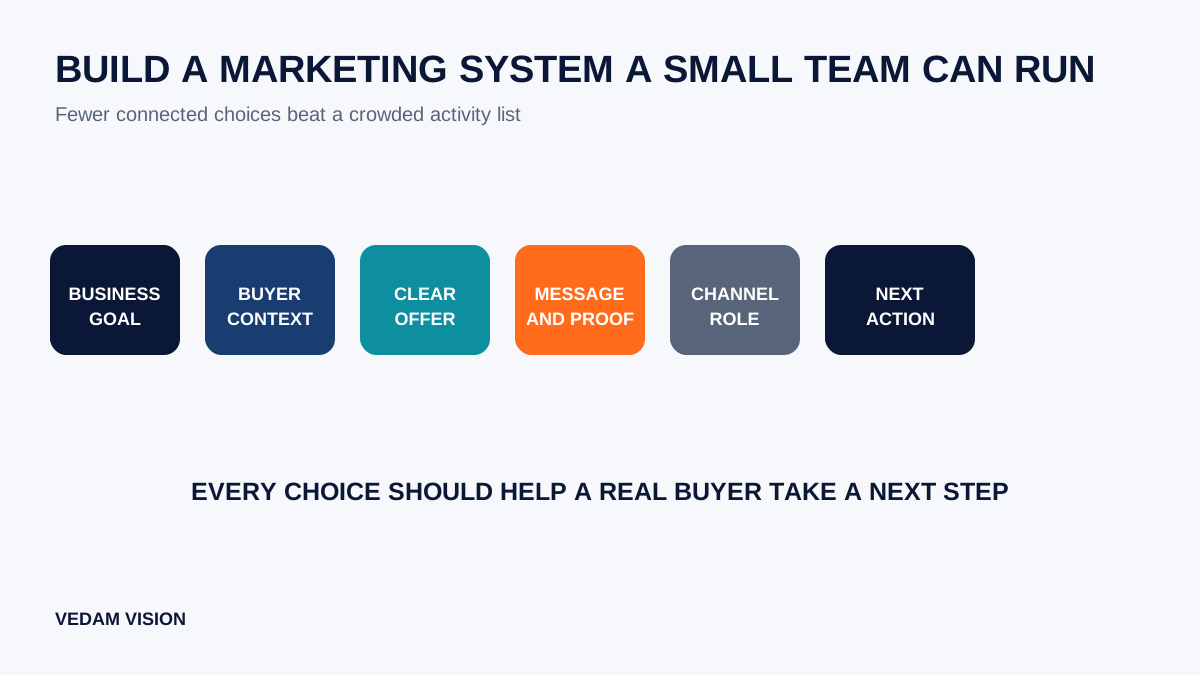
A marketing strategy for small business should answer a few hard questions before it produces a long list of activities: who you are trying to help, what problem you solve, why that buyer should choose you, where you can reach them, and what action you want them to take next. With limited time and budget, the strategy is mainly a decision tool. It helps a founder say no to channels, offers, campaigns, and content that create activity without moving a clear business goal.
Start with one customer group and one commercial priority. A local service business may need more qualified enquiries for a specific service. A growing B2B firm may need its website to explain a specialist offer before sales conversations begin. A product business may need repeatable product pages and a clearer path from discovery to purchase. These are different jobs. They should not be served by the same generic social posting plan.
The US Small Business Administration's planning guidance treats the business plan as a foundation for decisions, and its marketing-plan material covers market research, target market, competitive advantage, sales plan, goals, action plan, budget, and return on investment. Use that as a useful structure, not as paperwork to complete for its own sake. A small team needs a working version that can be revisited when evidence changes.
Choose the business result before choosing the channel
Begin by naming the result you want the next period of marketing to support. Good goals are specific enough to guide a choice without pretending that every result is fully controllable. Examples include: increase qualified enquiries for a defined service, make it easier for existing customers to understand a new offer, reduce confusion in sales conversations, rebuild a weak conversion page, or create an email sequence for people who have already shown interest.
Then identify the customer segment most connected to that goal. Avoid describing the audience as everyone who could possibly buy. Describe their situation, trigger, recurring problem, existing alternatives, decision barriers, and the language they use when they look for help. A buyer who needs urgent repair, a founder comparing service partners, and a customer researching a considered purchase will need different information and different proof before acting.
Use a one-page decision brief
- Priority business result and the date you will review it.
- Primary customer group, including their immediate situation and decision barrier.
- Offer to lead with, including what is included, excluded, and required from the buyer.
- Core message: problem, outcome, distinction, and a reason to believe.
- Primary path: where people will encounter the message and what they do next.
- Owner, realistic capacity, working budget, and the evidence you will inspect.
A defined brief protects the team from channel-led marketing. A new platform, competitor campaign, or trend may be interesting, but it should earn time by helping the stated priority. Your Vedam Vision process can begin with discovery and planning before production. That is often the step that stops a small business from paying for content, ads, or design that does not connect to a real decision.
Build the offer and message around the buyer's problem
A strategy becomes useful when it translates the offer into language a customer can recognise. Begin with the problem you solve, not a broad description of your company. “We provide quality services” does not help a buyer decide. “We help a business replace a confusing service page with a clear enquiry path and an accountable website plan” gives a more usable starting point. The statement still needs proof, scope, and careful claims, but it points to the customer's job.
List the questions a serious buyer will ask before they contact you. What is included? Who is it suitable for? What will they need to provide? What happens first? How long could a project take? What are the limitations? What proof can you offer without exaggeration? These questions become the raw material for service pages, sales conversations, proposals, email replies, and content. They also expose gaps in the offer itself.
A clear website gives this strategy a stable home. Use our work and portfolio and the case study library as examples of the kinds of proof a prospective customer may want to inspect. Do not promise results you cannot substantiate. Explain the method, the relevant work, the scope, and the next step. Credibility grows when the claim matches the evidence available.
Pick fewer channels and make each one do a job
A small business rarely has the people or budget to be consistently good everywhere. Select a small set of places where the intended buyer can realistically encounter, understand, and act on the offer. Your website commonly carries the durable explanation. Search can connect a question to that explanation over time. Email can continue a conversation with people who opted in. A social channel can make a useful idea or point of view easier to discover. Partnerships, referrals, local relationships, and sales follow-up may be more important than any platform for some businesses.
Give every channel a role. A homepage might clarify the overall offer. A service page may answer a high-intent question. An enquiry form may qualify a request. A short article may explain a decision a buyer is researching. An email follow-up may help an interested contact compare options. When a channel has no role, it is easy to fill it with content because a calendar says something must be posted.
Choose the path you can maintain. A good plan is not the one with the most formats. It is the one your team can create, review, publish, answer, and measure without turning the rest of the business into a bottleneck. If a website, design, or customer journey needs attention first, explore Vedam Vision services before adding another promotional layer.
Turn the strategy into a small operating rhythm
Set a repeatable weekly rhythm around the work you can actually complete. One session can collect customer questions and sales objections. Another can improve one page, offer explanation, or follow-up message. A third can review enquiries and conversations to learn what buyers did not understand. The output may be a single stronger page, a clearer proposal section, or a useful article. It does not need to be a large campaign.
Make ownership explicit. Someone needs to decide what is approved, who will respond to enquiries, how quickly that response should happen, and where notes from conversations are kept. Marketing suffers when demand is created but no one owns the next conversation. It also suffers when useful sales insight never reaches the person writing the website or content.
Measure the decisions, not vanity
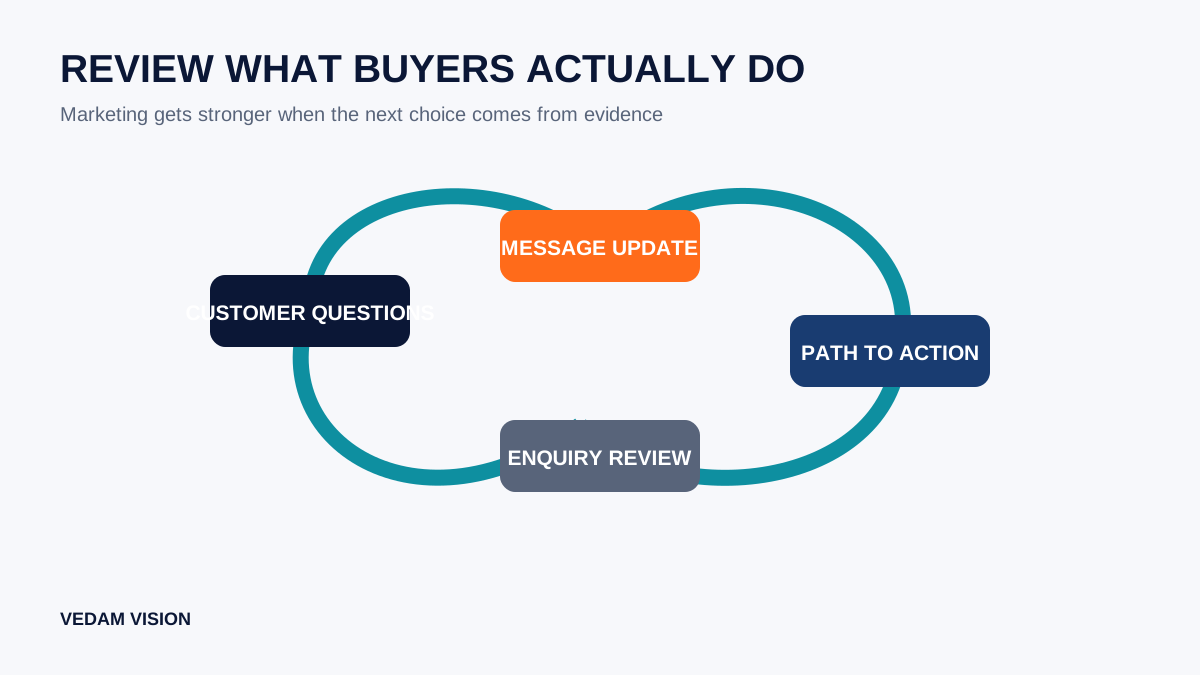
Start with the evidence that helps you choose what to change. Look at the quality and source of enquiries, the questions prospects repeat, completion of the next step, conversion by offer where available, and the time required to run the activity. Website visits or follower counts may be context, but they do not by themselves show whether the business is attracting the right people. Avoid treating a short period of movement as proof of a permanent pattern.
Review the plan at a set interval. Ask which message created useful conversations, which source brought an appropriate buyer, where people hesitated, and what the team learned about the offer. Then adjust one variable at a time where possible. Change the page, the qualification question, the offer framing, or the distribution choice. Do not change everything at once and then guess why the result changed.
Spend where the constraint really is
Budget should follow the bottleneck. If prospects do not understand the offer, improve the message and page before buying more traffic. If leads are arriving but not receiving timely replies, fix the handoff before adding a campaign. If the business lacks usable visual or written assets, build a small reusable base before trying to produce at high volume. If demand is genuinely constrained by reach and the conversion path is working, test a paid or partnership route with a bounded budget and a clear learning question.
There is no universal percentage that a small business should spend on marketing. Costs, margins, sales cycles, capacity, and competitive conditions vary too much. Set an amount you can afford to test, define what you need to learn, and include the internal time required to create, approve, follow up, and service the work. A low media bill can still be expensive if it creates an unmanageable manual process.
Know what a strategy cannot fix
Marketing cannot repair an offer that lacks a clear customer need, an unreliable delivery process, or a price that does not support the business. It cannot guarantee sales, and no channel is a substitute for understanding customers. Be especially careful with external advice that promises a fixed result from a certain posting frequency, ad format, or automation. Test in your own context, document what changes, and retain the option to stop.
If the strategy reveals a more fundamental digital issue, a free digital audit can help identify the next practical improvement. You can also contact Vedam Vision with the offer, customer group, and current bottleneck. The useful starting point is not a request for more marketing. It is a clear description of the decision your buyer cannot yet make easily.
Conclusion: focus beats a crowded plan
A marketing strategy for small business is strongest when it connects one business priority to one audience, a clear offer, a credible message, a manageable path to action, and a review habit. Choose fewer channels, give them specific jobs, and use buyer feedback to improve the next decision. That approach may look less busy than a crowded calendar. It gives a small team a better chance of learning what actually helps the business grow.