A useful go to market plan for services is a short operating plan, not a slide deck. It names the buyer, the problem worth paying to solve, the offer, the route to a sales conversation, and the signals that tell the team whether to adjust. For a service business, the work starts with focus. A wide audience and a vague promise create more activity, but rarely better enquiries.
This guide is for marketing leads who need to turn a capable service team into a market offer that buyers can understand and act on. It does not promise a fixed result. It gives the team a way to make choices, test them with real conversations, and keep delivery connected to what marketing says.
Start with a market decision, not a channel list
Many plans begin with a list of channels: LinkedIn, paid search, events, email, partnerships. Those are distribution choices. They matter only after the business has decided whose situation it is trying to improve. Begin with a narrow statement: a specific type of buyer, a recurring business moment, and a cost of leaving that moment unresolved.
For example, a web and automation studio might decide to help established service firms whose website generates interest but does not help a prospect decide what happens next. That is different from saying it serves every business that needs a website. The first statement guides a page, a sales conversation, and an audit. The second makes every message work too hard.
Use evidence already close to the business
Look at enquiries, proposals that stalled, questions from discovery calls, support requests, and reasons prospects chose a different route. These are not statistically complete research. They are practical clues. Write down the phrases buyers use, the conditions that create urgency, and the objections that appear before a decision. If the evidence is thin, speak to a small number of recent prospects before treating an assumption as a market fact.
The goal is not a perfect persona document. It is a decision the team can defend: who gets attention first, which problem is central, and which requests it will decline for now.
Turn capability into an offer a buyer can evaluate
Services are difficult to compare before they are experienced. A go-to-market plan needs an offer that reduces that uncertainty without pretending the work is identical for every client. State the starting point, the work included, the decision the buyer will receive, the boundaries, and the next sensible step.
A clear offer might begin with a paid discovery or audit, then lead to a defined implementation if both sides agree. Another business may package a monthly operating service with a minimum scope and review rhythm. The right shape depends on the work. What matters is that the buyer can see what is being considered and what is not.
Write the boundary as carefully as the benefit
Scope protects both the buyer and the delivery team. If an offer includes strategy, say whether design, implementation, software costs, content, training, or ongoing support are separate. If outcomes depend on the buyer supplying data or approvals, say so. A service promise becomes more credible when it includes the conditions needed to do good work.
Your service pages should carry this clarity. Review the wider Vedam Vision services and the AI solutions and automation work as examples of pages that need a clear problem, scope, and next step rather than a catalogue of capabilities.
Map the buying path before creating campaign assets
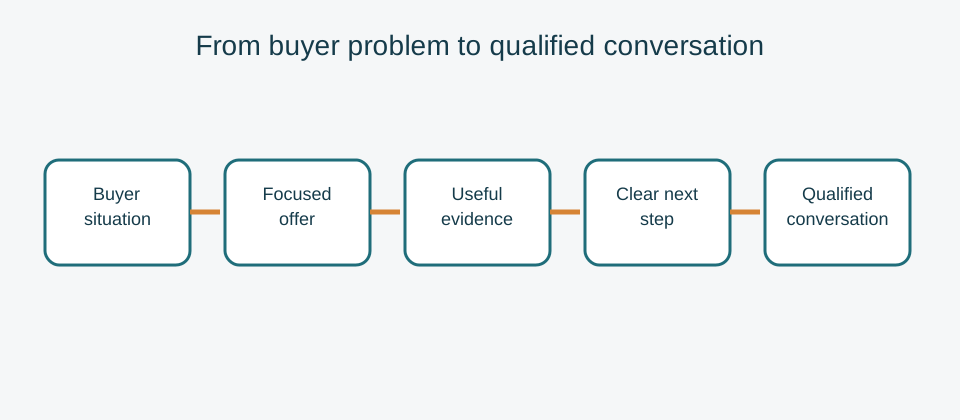
A service purchase rarely happens in one visit. A buyer may first need to understand the problem, then compare approaches, then decide whether the provider can be trusted with the work. Map the few moments that change the next question. The path can be simple: useful explanation, focused offer page, conversation, scoped proposal, decision.
At each point, ask what the buyer needs to know and what action is reasonable. An early article should help them diagnose a situation. An offer page should explain the process and boundaries. A conversation should qualify fit. A proposal should make the work, ownership, timeline assumptions, and commercial terms clear. Do not force every visitor into the same call to action.
Choose one primary conversion action
For a complex service, the best next step is often a brief enquiry, consultation, or audit request. Keep the action consistent across the campaign so reporting is meaningful. The free digital audit is an example of a lower-friction entry point. The contact route suits a buyer who already knows what they want. They serve different levels of readiness.
Build only the assets that support the path. A thoughtful landing page, a short explanatory article, proof that can be checked, and a responsive follow-up process are usually more useful than a large collection of disconnected posts.
Pick channels as testable routes to that buyer
Channel choice should follow buyer access, not fashion. If buyers ask peers for recommendations, partner relationships and visible proof may be more useful than broad paid reach. If they search when a problem becomes urgent, a focused page and helpful search content may earn attention. If the service is considered over time, a useful email follow-up can keep the conversation moving without pretending the decision is immediate.
Choose a small number of routes and write a hypothesis for each. For instance: a page answering a repeated buyer question may produce more relevant enquiries than a generic service page. Or a partner can introduce the offer when its own work reveals the same bottleneck. The plan is not validated by the number of channels selected. It is validated by whether the team learns which route brings the right conversations.
Keep the brand presentation consistent while testing. The Vedam Vision process can help a prospect understand how a project moves from discussion to delivery, while the portfolio and case study library give visitors places to assess the work. Use only proof that is accurate, current, and permitted to share.
Make sales and delivery part of the plan
A campaign can create interest that the business is not ready to handle. Agree how quickly someone responds, which questions qualify a lead, who owns the next step, and when a request should be declined. Marketing needs this feedback because lead volume without lead quality can make a plan look busy while delivery absorbs unsuitable work.
Create a short handoff note for each qualified conversation: the buyer situation, desired change, constraints, stakeholders, urgency, and open questions. This helps the sales or delivery lead avoid asking the prospect to repeat themselves. It also reveals patterns. If the same mismatch appears repeatedly, either the message is attracting the wrong audience or the offer boundary needs work.
Use a small scorecard
Track a few measures that support decisions: qualified conversations, proposal requests, proposal acceptance, source of enquiry, and common disqualification reason. Context matters. A tiny sample is a prompt for inquiry, not proof of a trend. Pair the numbers with call notes and delivery feedback before changing positioning or spending more on a channel.
Run the first cycle as a learning period
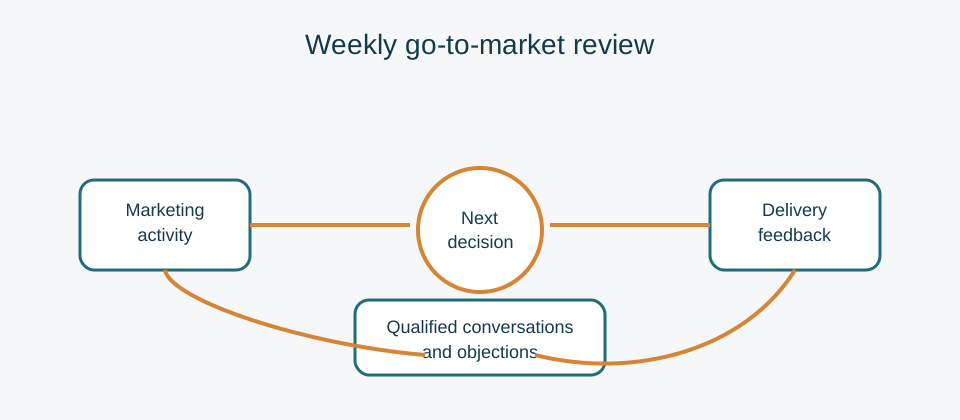
For the first few weeks, keep the plan visible and modest. Publish the core offer page. Create one helpful asset that answers the buyer's starting question. Activate one or two realistic routes to reach that buyer. Hold a weekly review with marketing and delivery. Decide what to retain, clarify, stop, or test next.
A useful review asks: did the message describe a situation buyers recognised? Did the offer set a fair expectation? Which question prevented progress? Did the sales process add confidence or create friction? These questions produce better adjustments than a demand for immediate scale.
There are limits. A clear plan cannot compensate for an offer that lacks capability, a delivery team without capacity, or a market that does not value the problem enough to act. It also cannot remove the need for business judgment. But it can stop a capable team from scattering effort across channels before it has earned a clear position.
A practical one-page go-to-market plan
- Buyer: Name the first group the team will serve and the people involved in the decision.
- Situation: Describe the trigger, consequence, and question the buyer is trying to resolve.
- Offer: State the scope, boundaries, decision or deliverable, and conditions for success.
- Buying path: Map the useful explanation, offer page, conversation, proposal, and decision.
- Routes: Select a small number of channels with a written hypothesis for each.
- Ownership: Name who creates assets, follows up, qualifies, and learns from delivery.
- Review: Set a recurring check on conversation quality, objections, and changes to make.
When this page is clear, marketing has a better basis for content, campaign briefs, and sales enablement. It also gives leadership a way to say no to work that pulls the offer apart.
Conclusion: make the next market decision clearer
A go to market plan for services works when it helps a team choose what to do next. Define a buyer and a problem, shape an offer with boundaries, map a realistic path to a conversation, and use a small review loop to improve. The plan should make the service easier to understand without making promises the business cannot keep.
If your current message has become a list of capabilities, start by clarifying the buyer situation and the decision your offer helps them make. That is a strong foundation for a more useful market presence.