
Positioning statement examples for service business are useful when they show the decisions behind the sentence, not when they provide a slogan to copy. A strong positioning statement identifies a specific customer, the situation or problem that matters to them, the service you provide, the outcome you help them work toward, and a meaningful distinction. It gives a founder a way to align the website, proposal, sales call, and content around the same promise. It does not need to claim that you are the best, fastest, or most trusted unless you can prove that statement.
Start with clarity, not cleverness. If your prospective customer cannot tell whether your service is for them, what it helps with, or why it is different from a general alternative, a polished phrase will not solve the problem. The statement is an internal decision tool first. It should help your team choose what to highlight, what to leave out, and which enquiries are a genuine fit.
The U.S. Small Business Administration includes target market and competitive advantage among the components of business planning. Those two ideas are central here. Positioning becomes practical when it is connected to a particular buyer and a distinction that can be explained with evidence, scope, method, experience, or a better-designed process. It becomes weak when it tries to impress every possible customer at once.
What a service-business positioning statement needs to do
Service businesses often sell work that is hard to inspect before purchase. A buyer may be choosing a designer, consultant, agency, developer, advisor, trainer, or specialist because they need judgment as well as delivery. That makes the early explanation important. The customer wants to know whether the provider understands their situation and whether the service will fit the decision in front of them.
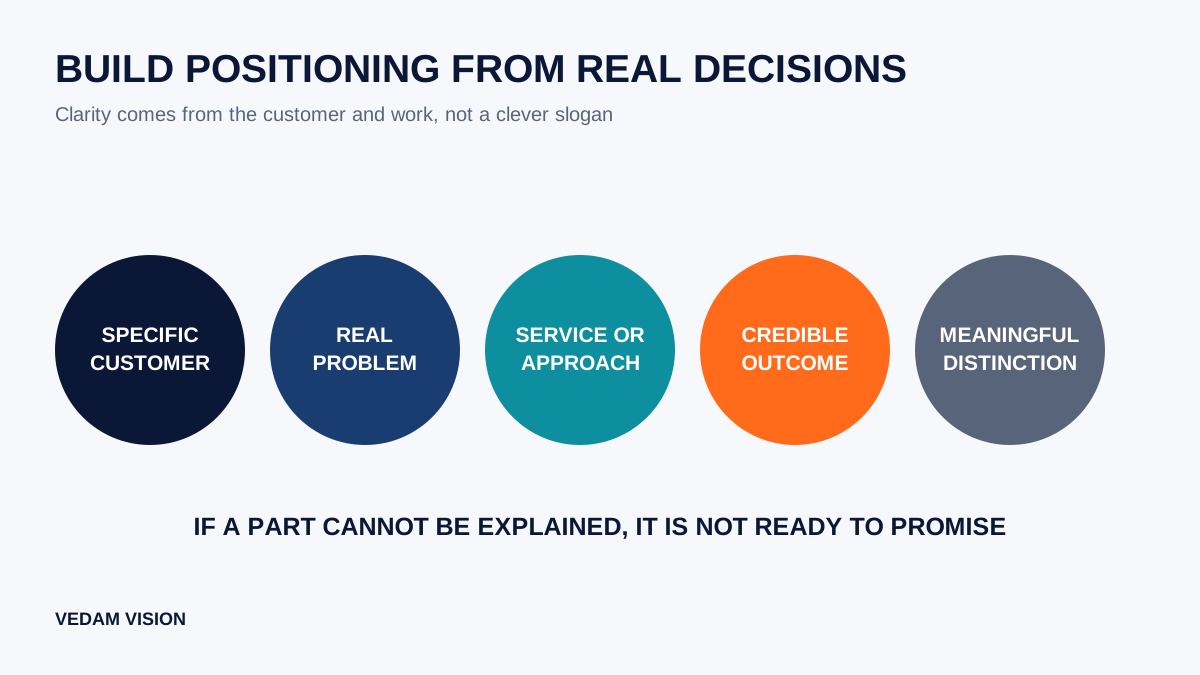
A useful statement covers five parts. It names the buyer in a specific situation. It names the problem or job they are trying to solve. It explains the service or approach. It gives a credible outcome, without guaranteeing a result. Finally, it includes a distinction that matters to that buyer. The distinction might be a defined process, an accessible specialty, a service boundary, a delivery model, or an evidence-based way of working.
A simple positioning structure
For [specific customer] who need [job or problem], [business] provides [service or approach] so they can [credible desired outcome]. Unlike [relevant alternative], we [meaningful, supportable distinction].
This is a working structure, not a final headline. It exposes vague thinking. If the customer is “any business,” narrow it. If the job is “growth,” name the immediate obstacle. If the outcome is “success,” translate it into a clearer buyer decision. If the distinction is “quality,” show what that means in the way you work. The final public wording may be shorter, but it should retain the choices that make it useful.
Do the customer and problem work before drafting
Start with current and prospective customers you can genuinely serve. Look at their context, their trigger for searching, the alternatives they may compare, and the question they need answered before engaging. Do not use invented personas or claim insights you do not have. Instead, use sales notes, support questions, existing enquiry patterns, competitor categories, and conversations your team has permission to review. Mark assumptions clearly where evidence is thin.
Service categories can hide important differences. “Small business owners” may include someone looking for a one-time website fix, a founder preparing a new offer, and a mature business replacing disconnected systems. They do not need the same promise. A positioning statement can focus on the segment where your experience, capability, and delivery model are strongest. Focus is not exclusion for its own sake. It makes the right enquiry easier to recognise.
The Vedam Vision process is useful as a test. Can the statement lead naturally into discovery, planning, production, approval, and support? If it cannot, it may promise an outcome the business cannot operationalise. Positioning should make delivery clearer for the team as well as selection easier for the customer.
Examples that show the decisions, not promises to copy
Example: specialist website work. For established service businesses whose websites no longer explain a complex offer clearly, we design and develop structured websites that make services, proof, and next steps easier to understand. Unlike a general template refresh, our process begins with offer clarity and content decisions before visual production. This example names a situation, keeps the outcome proportionate, and differentiates through the sequence of work rather than an unsupported superlative.
Example: operational automation. For small teams spending too much time moving approved information between systems, we design bounded automation workflows with named review and escalation points. The aim is to reduce repeated coordination work while retaining accountability for customer-facing or high-impact decisions. Unlike a tool-first setup, the work begins with the current handoff, approved inputs, and failure path. This example works because it includes a limitation. It does not suggest that automation replaces judgment.
Example: brand and offer clarity. For founders preparing to take a specialist service to market, we help turn the offer into a clear identity, message, and digital foundation that customers can understand. Rather than starting with a logo alone, the engagement connects the audience, offer, language, and practical customer path. This example avoids claiming that a brand will create sales. It explains the part of the buyer journey the work supports.
These examples are structures, not facts about every business. Replace the customer, problem, capability, and distinction with what you can support. If you cannot explain the distinction in a sales conversation, it is probably decoration rather than positioning.
Turn the statement into clear website and sales language
Once the internal statement is sound, adapt it to each context. A homepage may lead with the customer problem and the service outcome. A service page can explain scope, process, limitations, and next step. A proposal can use the same language to connect the client's stated problem with the work proposed. Sales conversations can use it to qualify whether the buyer is a fit. Content can answer the questions that arise from the positioning rather than publishing around a broad topic with no connection to the offer.
Keep the language people-first. Google's guidance on helpful, reliable content asks creators to focus on people rather than primarily trying to manipulate search rankings. For a service business, that means the page should give a prospective customer enough information to make a better next decision. It should not merely repeat a keyword or make a claim without support. A clear explanation is usually better for both a reader and a search system than vague marketing language.
Review the existing site through that lens. Does the visitor understand who the service helps? Is the problem recognisable? Can they tell what happens next? Are services, proof, and contact paths easy to find? The Vedam Vision services overview, portfolio, and case studies show why these areas need to work together. A statement that appears only on an internal document cannot clarify an enquiry.
Test for fit, credibility, and operational truth
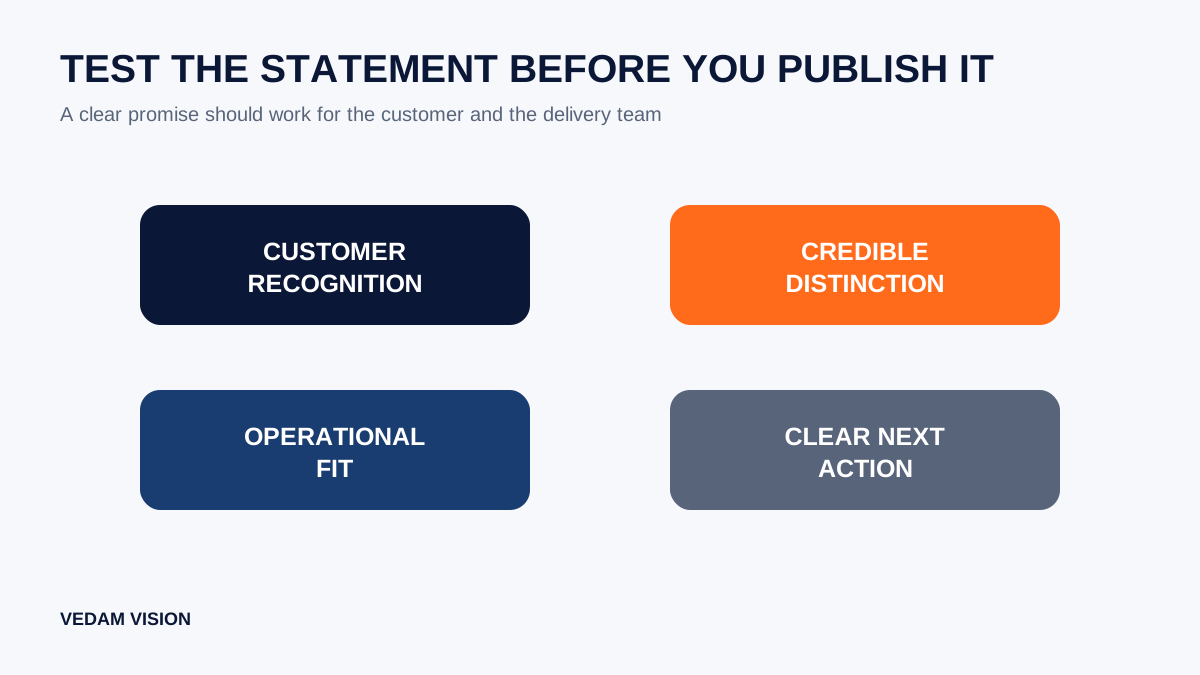
Read the statement with three different questions. First, would the intended customer recognise their situation? Second, could a colleague explain the service and distinction without adding vague claims? Third, can the business deliver the promise in the normal course of its work? If the answer is no, change the statement before you publish it. A statement should create useful expectations, not force the delivery team to repair a misunderstanding.
Ask a few colleagues or trusted customers for qualitative feedback where appropriate. Do not turn a handful of conversations into a market statistic. Listen for confusion: words people interpret differently, outcomes they assume are guaranteed, or services they think are included when they are not. Use the feedback to sharpen the boundary. A clear “not for” can sometimes improve enquiries more than another benefit line.
Know what positioning cannot solve
Positioning will not fix a service that has no viable customer demand, inconsistent delivery, unclear pricing, or a poor customer experience. It will not make every enquiry suitable. It should help the business attract better-fit conversations and make early decisions easier, not promise a particular commercial result. If the offer still changes from conversation to conversation, work on service design before making the public message more ambitious.
It also needs maintenance. New services, market changes, customer language, and lessons from delivery can make an older statement less accurate. Review it when the business changes direction, when customer questions repeat, or when the team finds itself explaining the offer in a materially different way. The goal is a living point of view that remains connected to reality.
Conclusion: clarity creates better starting conversations
The best positioning statement examples for service business are not the most dramatic. They are specific, credible, and easy to carry into the rest of the business. Define the customer, the problem, the service, the realistic outcome, and the distinction you can prove. Then use the statement to improve pages, proposals, content, and sales conversations. If you need help connecting that work to a practical digital path, request a free digital audit or contact Vedam Vision with the offer you want to clarify.