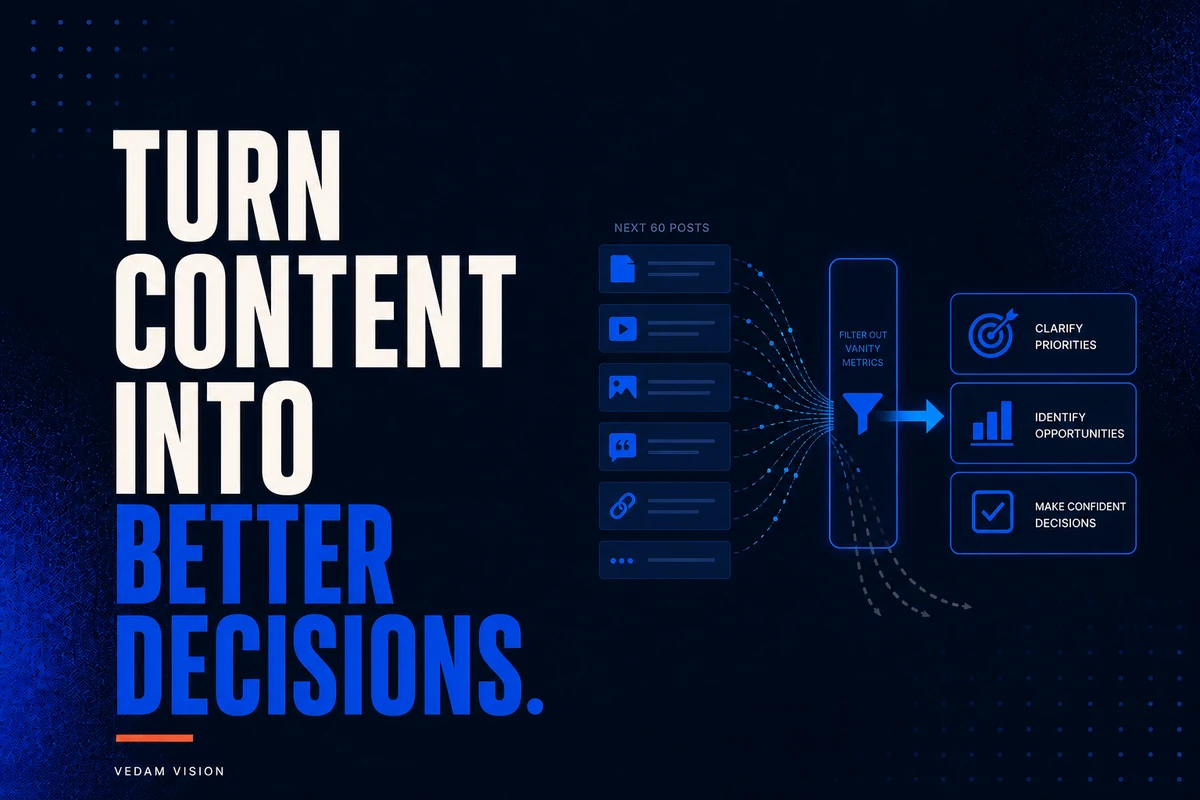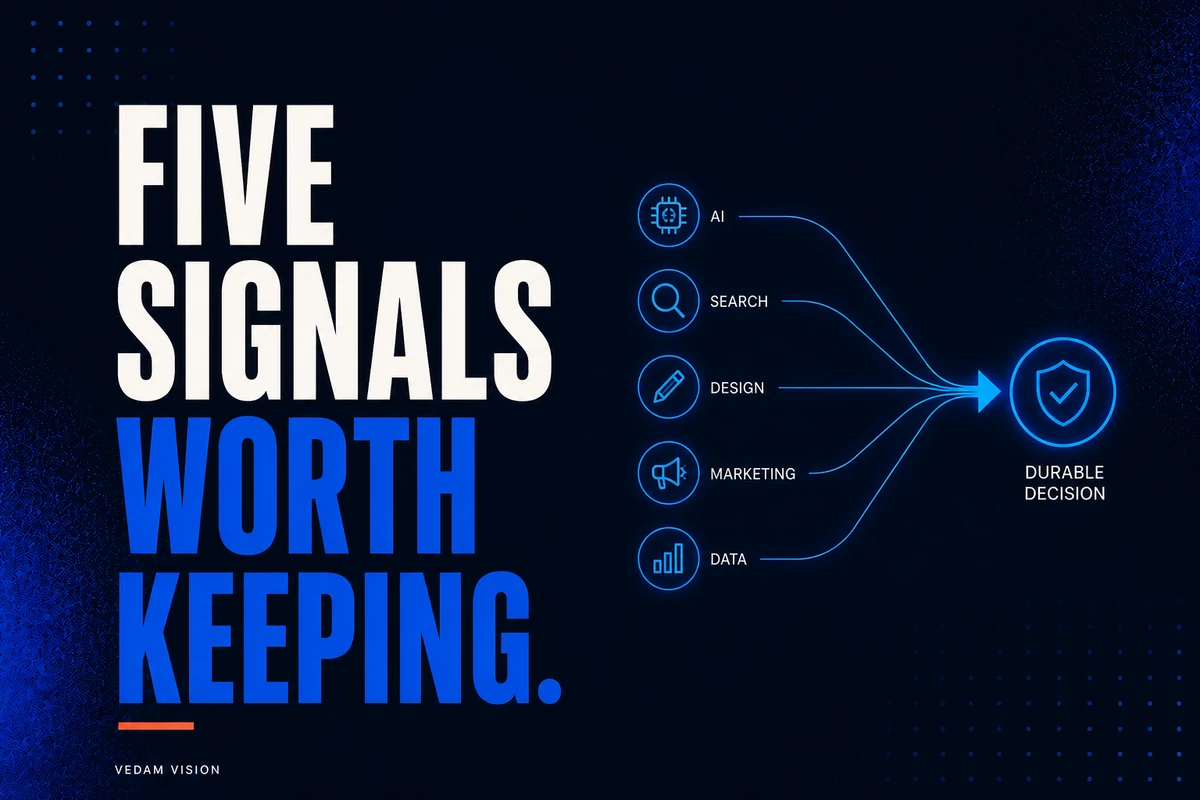
AI is changing digital marketing in 2026 at both the tactical and strategic levels. It is affecting how content is produced, how ads are optimized, how leads are handled, and how marketing teams make decisions. But despite the hype, the real gains do not come from using AI everywhere. They come from using AI where it improves speed, clarity, and execution quality.
The businesses that benefit most are not the ones chasing every new tool. They are the ones using AI to build a stronger marketing system.
Where AI is creating the biggest impact

Content production
AI now helps marketers brainstorm topics, create outlines, repurpose assets, draft first versions, and produce support material faster. That reduces content bottlenecks, especially for small teams.
Ad optimization
Platforms already use AI heavily for bidding, targeting, and delivery optimization. The business advantage now comes from better inputs: strong creatives, clean conversion signals, better landing pages, and smarter testing.
Lead response and automation
AI is helping businesses acknowledge enquiries faster, qualify leads, and automate repetitive communication. That improves response speed and often improves conversion rate more than increasing traffic.
Data summarization and reporting
Instead of drowning in metrics, teams can use AI to summarize performance trends, identify anomalies, and surface improvement opportunities faster.
| Marketing area | How AI helps | Main caution |
|---|---|---|
| Content | Faster ideation and drafting | Can become generic without editing |
| Paid ads | Supports testing and optimization | Still depends on good strategy and creative |
| Lead handling | Improves response speed and routing | Needs clear human handoff |
| Reporting | Surfaces patterns quickly | Bad inputs still create bad conclusions |
| Personalization | Improves relevance at scale | Must stay useful, not intrusive |
What AI is not replacing
AI is not replacing positioning, business judgment, or deep audience understanding. It can accelerate tasks, but it still needs direction. If your strategy is weak, AI will simply help you execute weak strategy faster.
What smart businesses should focus on
- Use AI to reduce repetitive execution time.
- Improve prompt quality by using better briefs.
- Keep human review in messaging, design, and strategic choices.
- Connect AI workflows to real business goals like leads, sales, and retention.
Common mistakes in AI-driven marketing
- Publishing unedited AI content.
- Over-automating customer communication.
- Confusing activity volume with marketing quality.
- Ignoring website and funnel issues while focusing only on AI tools.
- Choosing tools before defining the process.
What 2026 marketers need to do differently
Marketing teams need stronger systems thinking. Instead of asking, “Which AI tool is trending?” ask, “Where are we slow, repetitive, inconsistent, or losing opportunities?” That is where AI becomes valuable.
The best use cases often sit in content workflows, CRM routing, campaign analysis, creative iteration, and lead follow-up. Those are high-friction zones in many businesses.
FAQ: AI in digital marketing
Is AI replacing digital marketing agencies?
No. It is changing how agencies work, but strategy, execution quality, and business context still matter deeply.
What is the best use of AI in marketing right now?
Content support, workflow automation, reporting assistance, and faster lead response are some of the strongest use cases.
Should small businesses use AI in marketing?
Yes, but selectively. Start where it creates practical gains instead of adding complexity.
Can AI improve ad performance on its own?
Not reliably. AI can help optimize delivery, but ad performance still depends on targeting logic, landing pages, offer clarity, and strong creative.
If your marketing feels fragmented, check our services or request a free audit to identify where AI and automation can help most.
Execution checklist
AI delivers more value when it improves execution systems instead of just adding more content volume. becomes easier to scale when teams use a checklist for quality. That checklist may include message clarity, proof placement, internal links, strong CTA logic, visual consistency, and response flow. A checklist helps protect quality when more content or campaigns are being produced quickly.
It also improves collaboration because the expectations become clearer for everyone involved in the work.
Why this matters long term
Businesses often look at marketing assets one by one, but long-term performance is usually driven by systems. Better systems create stronger consistency, faster iteration, and clearer decision-making. That is why improving one asset should ideally feed into a broader operating pattern instead of being treated as an isolated win.
Over time, that systems approach usually produces stronger trust, better conversion, and more predictable growth.