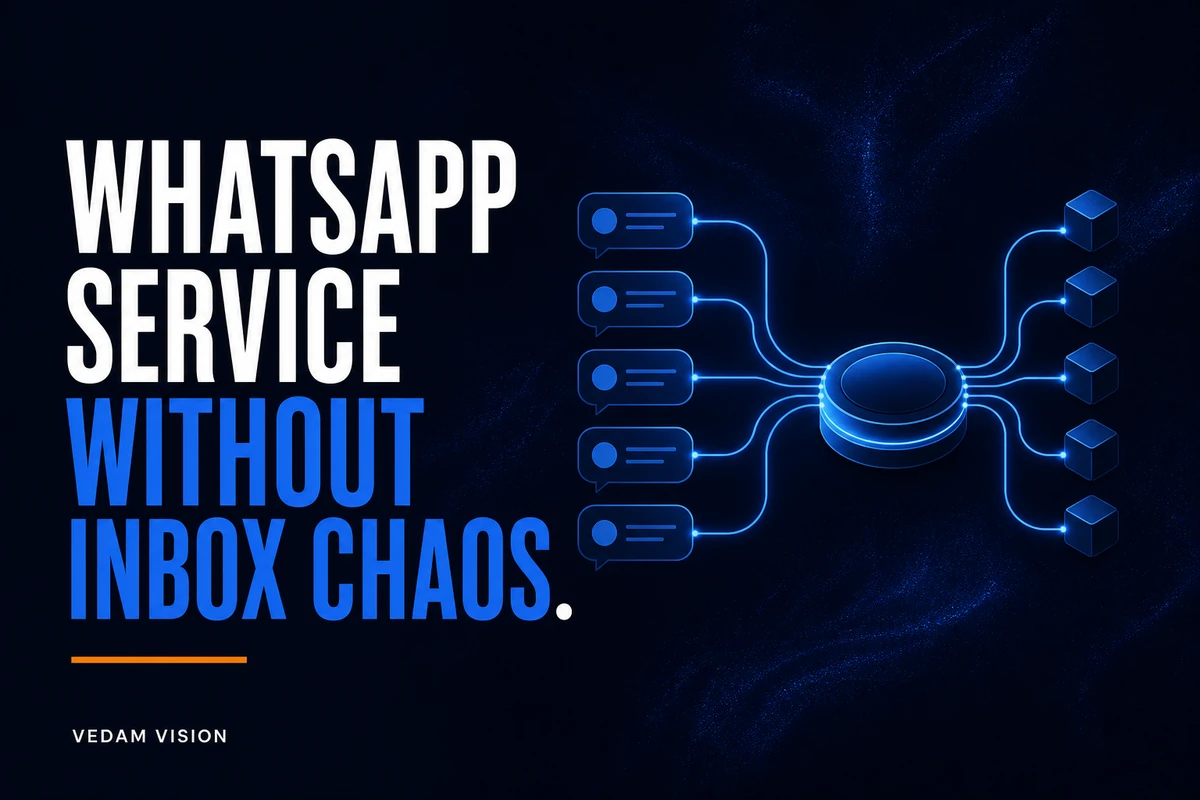
Quick answer: Use WhatsApp as a defined service channel, not as an unlimited personal inbox. Set expectations, capture consent, route conversations, preserve context, protect data, escalate risk, and close each case visibly.
WhatsApp feels immediate, which can encourage customers to expect continuous access and teams to solve important issues through unstructured chats with unclear ownership.
The channel works when convenience is supported by policy, staffing, records, privacy, and a path to another channel when the issue needs more structure.
This guide is written for service teams who need a practical answer rather than another collection of tools or slogans. Work with one real service, customer journey, campaign, or reporting period. Mark assumptions clearly, keep the source evidence, and make the smallest decision that improves the next live situation.
A practical implementation model
The following sequence turns WhatsApp business customer service into work that can be assigned, reviewed, and improved. The order matters because later decisions depend on a clear problem, an accountable owner, and evidence from the earlier step.
1. Define the channel promise
What to do: State what customers can use WhatsApp for, service hours, expected response window, languages, and what belongs elsewhere. Write the current answer in plain language and test it against a recent example before introducing a new tool, template, or automation.
Why it matters: Clear boundaries help customers choose the right route and protect the team from implied twenty-four-hour support. Without this connection, the team may complete more activity while the customer problem, commercial risk, or operating constraint remains unchanged.
Guardrail: Never advertise a response promise that staffing cannot meet. Keep an exception route and a named person who can use judgement when the normal rule does not fit. Evidence to retain: Published channel scope, hours, response expectation, and alternative contact.
2. Capture consent and context
What to do: Make the business identity clear, respect opt-out, and collect only the minimum information needed to understand the request. Write the current answer in plain language and test it against a recent example before introducing a new tool, template, or automation.
Why it matters: Responsible messaging begins with permission, purpose, and proportionate data use. Without this connection, the team may complete more activity while the customer problem, commercial risk, or operating constraint remains unchanged.
Guardrail: Follow the official WhatsApp Business Messaging Policy and applicable privacy requirements. Keep an exception route and a named person who can use judgement when the normal rule does not fit. Evidence to retain: Consent source, purpose, customer identifier, and information requested.
3. Route with visible ownership
What to do: Classify the conversation, assign an owner, set priority, and keep an unassigned queue for ambiguous cases. Write the current answer in plain language and test it against a recent example before introducing a new tool, template, or automation.
Why it matters: A shared inbox is useful only when every conversation has a visible state. Without this connection, the team may complete more activity while the customer problem, commercial risk, or operating constraint remains unchanged.
Guardrail: Do not let personal devices or informal forwarding become the only business record. Keep an exception route and a named person who can use judgement when the normal rule does not fit. Evidence to retain: Conversation ID, category, owner, priority, and last action.
4. Use templates as prompts
What to do: Create short approved messages for acknowledgement, clarification, progress, delay, escalation, and closure. Write the current answer in plain language and test it against a recent example before introducing a new tool, template, or automation.
Why it matters: Templates improve consistency while leaving room for a human response to the actual issue. Without this connection, the team may complete more activity while the customer problem, commercial risk, or operating constraint remains unchanged.
Guardrail: Avoid robotic repetition, unsupported promises, and sensitive information in reusable text. Keep an exception route and a named person who can use judgement when the normal rule does not fit. Evidence to retain: Template purpose, approved wording, owner, and review date.
5. Escalate and close
What to do: Move complex, sensitive, contractual, or unsafe issues to the correct channel, then confirm resolution and record the outcome. Write the current answer in plain language and test it against a recent example before introducing a new tool, template, or automation.
Why it matters: Customers need continuity when the conversation leaves WhatsApp. Without this connection, the team may complete more activity while the customer problem, commercial risk, or operating constraint remains unchanged.
Guardrail: Do not close a case because a message was sent. Close it when the next responsibility is clear. Keep an exception route and a named person who can use judgement when the normal rule does not fit. Evidence to retain: Escalation reason, destination, owner, customer confirmation, and closure code.
Decisions to settle before implementation
Answer these questions with the people who perform, receive, and manage the work. A short written answer is more valuable than a long discussion that leaves responsibility implicit. Record disagreements because they often reveal the real constraint.
- What service requests belong on WhatsApp? This defines the channel boundary. Add the owner, supporting evidence, and the condition that would change the answer.
- What response time can the team sustain? This creates a credible promise. Add the owner, supporting evidence, and the condition that would change the answer.
- Who owns unassigned conversations? This prevents silent cases. Add the owner, supporting evidence, and the condition that would change the answer.
- Which information should never be requested in chat? This protects privacy and security. Add the owner, supporting evidence, and the condition that would change the answer.
- When must the case move to another channel? This supports complex or sensitive work. Add the owner, supporting evidence, and the condition that would change the answer.
- What proves the conversation is resolved? This makes closure visible. Add the owner, supporting evidence, and the condition that would change the answer.
Run one focused working session
Audit one week of anonymised conversations. Group them by purpose, urgency, owner, repeat question, escalation, and unresolved state. Do not copy personal information into the workshop.
Choose the three most common conversation types. Design a clear opening, required context, owner, target response, escalation route, and closure line for each before adding automation.
Close the session with a single current-state record. It should show the agreed problem, the first change, the responsible person, the customer or business risk, the evidence to collect, and the review date. If the output is only a list of ideas, the session has not yet created an operating decision.
Use a small live sample. Note what the team expected, what actually happened, what exception appeared, and whether the change improved the intended outcome or simply moved effort to another person. That comparison keeps improvement grounded in evidence.
Limitations and tradeoffs
No framework removes uncertainty. Use the lightest control that changes a meaningful decision, and increase formality only when consequence, volume, complexity, or regulation requires it.
- WhatsApp features and policy requirements can change, so review official sources. Review this condition when the customer promise, team, tool, policy, or market changes.
- Customers may need a phone, email, accessible form, or in-person alternative. Review this condition when the customer promise, team, tool, policy, or market changes.
- Automation should not make high-risk decisions or conceal the option to reach a person. Review this condition when the customer promise, team, tool, policy, or market changes.
- Message volume can exceed staffing quickly when the channel promise is unclear. Review this condition when the customer promise, team, tool, policy, or market changes.
How to judge whether the system is working
The channel is working when fewer conversations remain unassigned, customers know what happens next, sensitive issues move safely, response promises match staffing, and closure can be verified without reading every message.
Review intended outcomes and exceptions together. A faster process can still create poorer decisions, weaker trust, hidden risk, or extra work downstream. Keep definitions visible, compare like with like, and add qualitative context before acting on a surprising number.
When the evidence is weak, choose a reversible test rather than a permanent rule. Record the baseline, expected change, people affected, risk boundary, observation period, and decision that follows. This makes learning useful even when the first idea does not work.
Make the improvement sustainable
Put the current version where the work happens. Name the maintainer, not only the executive sponsor. Train new people on the reason behind each control, because a checklist copied without context will gradually become ceremony.
Review the system after a meaningful change, incident, customer complaint, new tool, staff transition, or repeated exception. Remove fields and steps that do not support a decision. Add a control only when the evidence shows a recurring risk or a customer need that the current process cannot handle.
Share the output with people who receive the work, not only those who create it. Their questions reveal missing context, unclear promises, and responsibilities that look obvious to the sender but disappear at the handoff.
Useful Vedam Vision resources
Explore our services overview, website design and development, portfolio, and case studies. You can also review the Vedam Vision process, browse the Vedam Vision blog, request a free audit, or use the contact page.
A practical next step
If WhatsApp is useful but difficult to control, message Vedam Vision with the top conversation types and current handoff. We can help design the routing, website entry points, templates, and service workflow.
Bring one real example and the evidence already available. The first useful change is usually smaller than a full redesign, easier to verify, and more valuable than adding another disconnected tool.