Quick answer: A founder should review priorities, ownership, delivery commitments, customer issues, cash visibility, capacity, documented processes, system access, and material risks. The purpose is to move recurring decisions from founder memory into an owned operating rhythm.
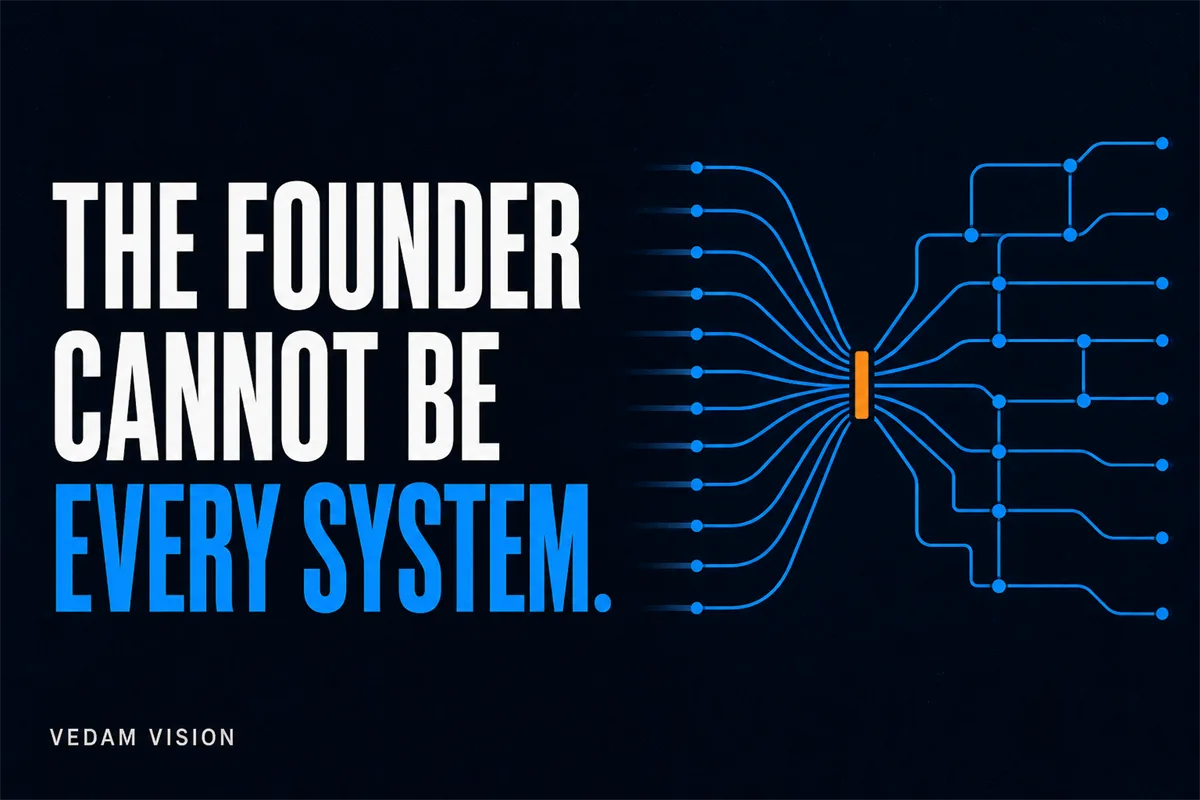
The founder becomes a bottleneck when every exception, approval, update, and piece of context must pass through one person. Hard work can hide that dependency for a while, but growth exposes it.
An operations checklist should not create more reporting. It should identify where work is waiting, where authority is unclear, and which recurring decision can move closer to the people doing the work.
Use this weekly at first. When an area becomes stable and owned, reduce the review frequency. Attention should follow risk and change.
A practical working model
The model below turns small business operations checklist into a sequence that founders can inspect, assign, and improve. Use it as a conversation guide, then adapt the detail to the consequence, volume, and maturity of the work.
1. Set the few priorities
What to do: Name the outcomes that matter this week and what will not be pursued. Why it matters: A short priority list protects capacity from constant founder interruption.
Guardrail: Distinguish urgent noise from customer or business consequence. This boundary keeps the work useful when a normal case changes or a person needs to exercise judgement. Evidence to keep: Priority, owner, outcome, and review date.
2. Check ownership
What to do: Confirm every active commitment has one accountable owner and a clear next action. Why it matters: Shared responsibility often becomes no responsibility.
Guardrail: Ownership includes authority, information, and escalation access. This boundary keeps the work useful when a normal case changes or a person needs to exercise judgement. Evidence to keep: Commitment, owner, next action, and dependency.
3. Review delivery health
What to do: Look at milestones at risk, blocked work, rework, and client dependencies. Why it matters: Early visibility makes support possible before a promise is missed.
Guardrail: Do not turn the review into public blame. This boundary keeps the work useful when a normal case changes or a person needs to exercise judgement. Evidence to keep: Milestone, state, blocker, decision, and owner.
4. Review customer signals
What to do: Collect material complaints, praise, churn risk, repeated questions, and unresolved requests. Why it matters: Customer friction often points to an operating problem.
Guardrail: Separate one-off preferences from recurring patterns. This boundary keeps the work useful when a normal case changes or a person needs to exercise judgement. Evidence to keep: Signal, source, impact, owner, and response.
5. Check cash and commitments
What to do: Review current visibility, expected inflows, required outflows, and overdue actions with appropriate financial records. Why it matters: Operating decisions depend on timing as well as totals.
Guardrail: Use professional accounting and advice where required. This boundary keeps the work useful when a normal case changes or a person needs to exercise judgement. Evidence to keep: Source date, item, owner, and action.
6. Check capacity and handoffs
What to do: Identify overloaded roles, single points of failure, and work waiting between people. Why it matters: The bottleneck may be a handoff or authority gap, not effort.
Guardrail: Avoid solving every pressure with overtime. This boundary keeps the work useful when a normal case changes or a person needs to exercise judgement. Evidence to keep: Role, load, handoff, backup, and decision.
7. Choose one system improvement
What to do: Select one recurring issue to document, simplify, delegate, or automate. Why it matters: Small weekly improvements compound without creating a transformation programme.
Guardrail: Finish and observe one change before starting several. This boundary keeps the work useful when a normal case changes or a person needs to exercise judgement. Evidence to keep: Problem, change, owner, measure, and follow-up.
Questions to answer before implementation
Do not rush through these questions. A short written answer creates a shared decision record and reveals where the proposed process still depends on assumptions or personal memory.
- Which decision still requires the founder? Keep strategic, legal, financial, and high-consequence authority where appropriate, and move routine choices outward. Record the answer, owner, and any evidence that would change it.
- What information arrives too late? Improve the signal or review rhythm instead of asking for more updates. Record the answer, owner, and any evidence that would change it.
- Where is work waiting? Queues reveal unclear ownership, missing inputs, or overloaded capacity. Record the answer, owner, and any evidence that would change it.
- Which exception repeats? Recurring exceptions deserve a rule, process change, or designed escalation. Record the answer, owner, and any evidence that would change it.
- What can stop this week? Removing low-value work creates real capacity. Record the answer, owner, and any evidence that would change it.
- What single improvement will be reviewed next week? A named experiment converts discussion into learning. Record the answer, owner, and any evidence that would change it.
Run a focused working session
Run the review from one shared page. Each item must end as noted, assigned, decided, or deliberately parked. If the founder repeatedly rewrites every action, the next improvement is decision boundaries, not a better checklist.
Once a month, examine where the founder was pulled back into routine work. Classify the cause as missing authority, missing skill, missing information, customer risk, or process failure. The classification suggests a different fix.
Close the session with three artefacts: the current decision, the named owner, and the date when evidence will be reviewed. If the team leaves with only more ideas, the session has not yet changed the operating system.
Limitations and tradeoffs
Every framework simplifies reality. Apply this one in proportion to the risk and avoid turning a useful control into unnecessary ceremony.
- Founder involvement is appropriate for high-consequence and genuinely novel decisions. Review this condition when the process, customer promise, team, tool, or jurisdiction changes.
- A checklist cannot compensate for unrealistic workload or insufficient resources. Review this condition when the process, customer promise, team, tool, or jurisdiction changes.
- Delegation without authority and context simply moves the bottleneck. Review this condition when the process, customer promise, team, tool, or jurisdiction changes.
- Financial, employment, legal, safety, and privacy decisions may need qualified advice. Review this condition when the process, customer promise, team, tool, or jurisdiction changes.
How to judge whether it is working
Progress looks like fewer routine interruptions, clearer owners, earlier risk signals, more consistent delivery, and a founder spending more time on decisions that genuinely need their judgement.
Review both the intended outcome and the exceptions. A process can look faster while shifting work to another person, creating risk, or making the customer experience less clear. Keep the measures small, definitions visible, and interpretation human.
Turn the framework into an operating habit
A framework becomes valuable when it survives the first workshop. Put the current version where the work happens, name the person who maintains it, and choose a review rhythm that matches the consequence. For founders, the aim is not to inspect every action. The aim is to notice when assumptions, inputs, ownership, or customer needs have changed enough to require a decision.
Begin with a small live sample and keep a short decision log. Record what the team expected, what actually happened, which exception appeared, and what changed as a result. This creates evidence for improving small business operations checklist without turning every unusual case into a permanent rule. If a control adds effort but never changes a decision, simplify or remove it.
Share the latest version with everyone affected by the workflow, including the people who receive its output. Their questions often reveal unclear handoffs, missing context, or safeguards that exist on paper but not in daily work. Capture those observations before the next review so improvement is based on evidence rather than memory.
- Review Set the few priorities: confirm that its owner, evidence, boundary, and next action are still current before expanding the system.
- Review Check ownership: confirm that its owner, evidence, boundary, and next action are still current before expanding the system.
- Review Review delivery health: confirm that its owner, evidence, boundary, and next action are still current before expanding the system.
- Review Review customer signals: confirm that its owner, evidence, boundary, and next action are still current before expanding the system.
Useful Vedam Vision resources
Explore our services overview, website design and development, portfolio, and case studies. You can also review the Vedam Vision process, browse the Vedam Vision blog, request a free audit, or use the contact page.
A practical next step
If your business pauses whenever you step away, send Vedam Vision the recurring decisions that return to you. We can help map ownership, review rhythm, documentation, and safe automation.
Start with one real situation, not a hypothetical transformation. Bring the current artefacts, the people who do the work, and the exceptions that cause the most delay. The first useful change is usually smaller and clearer than the tool list suggests.