Quick answer: Start with repetitive, rules-based work where the input is clear, a human can verify the output, and a failure is easy to detect. Good first candidates include intake routing, internal reminders, status updates, document preparation, and approval prompts.
The safest first automation is rarely the most impressive demo. It is usually a small, visible process with clear rules, moderate volume, and a person who already knows what correct work looks like. That combination makes errors easier to notice and lessons easier to apply.
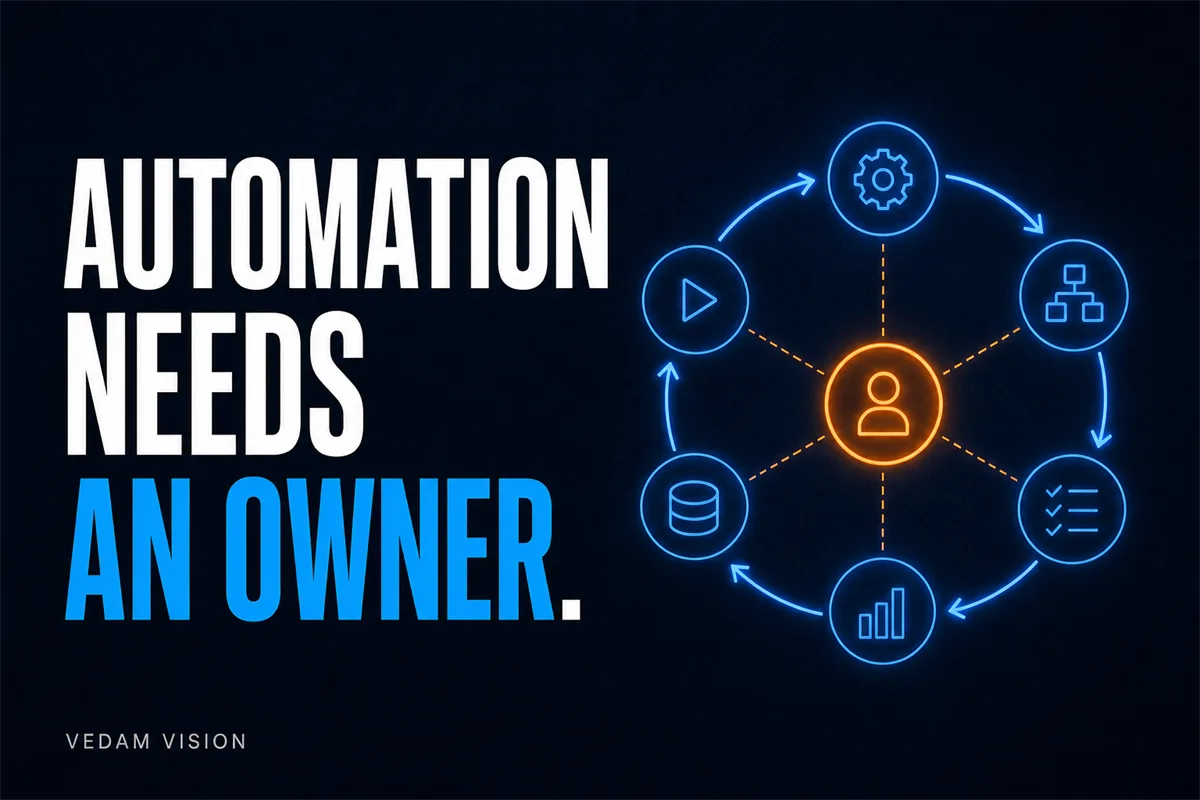
Automation should remove avoidable handling without hiding responsibility. A message can be sent automatically, but someone still owns the customer promise. A record can be created automatically, but someone still decides whether the information is complete.
Choose one example from the list below, run it beside the manual process for a short period, and keep a simple exception log. The goal of a pilot is reliable learning, not maximum automation.
A practical working model
The model below turns business process automation examples into a sequence that operations managers can inspect, assign, and improve. Use it as a conversation guide, then adapt the detail to the consequence, volume, and maturity of the work.
1. Route new enquiries
What to do: Capture a form submission, label the source and service, create a lead record, and alert the correct owner. Why it matters: The rules are visible and the original submission remains available for checking.
Guardrail: Keep spam filtering, consent, duplicate handling, and an unassigned queue for unclear cases. This boundary keeps the work useful when a normal case changes or a person needs to exercise judgement. Evidence to keep: Submission ID, routing result, owner, and response timestamp.
2. Send internal deadline reminders
What to do: Calculate a reminder date from an agreed due date and notify the task owner before work becomes urgent. Why it matters: The automation supports an existing commitment rather than making a judgement.
Guardrail: Allow owners to correct dates and suppress reminders when work is complete. This boundary keeps the work useful when a normal case changes or a person needs to exercise judgement. Evidence to keep: Due date, reminder event, completion state, and overdue exception.
3. Prepare recurring reports
What to do: Collect approved data fields into a standard weekly view and flag missing inputs for review. Why it matters: A consistent report reduces copying while keeping interpretation with the manager.
Guardrail: Do not merge metrics with different definitions or conceal missing data. This boundary keeps the work useful when a normal case changes or a person needs to exercise judgement. Evidence to keep: Source timestamp, definition, owner, and validation status.
4. Create project folders and checklists
What to do: After a signed or approved trigger, create the standard workspace, task list, and ownership fields. Why it matters: The trigger and outputs can be inspected before client work begins.
Guardrail: Do not use an informal message as proof of commercial approval. This boundary keeps the work useful when a normal case changes or a person needs to exercise judgement. Evidence to keep: Approval reference, workspace link, template version, and owner.
5. Confirm form completion
What to do: Send a clear success message and next-step email after a valid submission. Why it matters: The customer receives immediate certainty while the team retains responsibility for follow-up.
Guardrail: Never promise a deadline the operating team cannot meet. This boundary keeps the work useful when a normal case changes or a person needs to exercise judgement. Evidence to keep: Submission status, notification status, and handoff owner.
6. Request approvals
What to do: Package the current version, decision question, due date, and approver into one controlled request. Why it matters: The automation moves information but leaves the decision with an authorised person.
Guardrail: Prevent approval of an outdated version and record who approved what. This boundary keeps the work useful when a normal case changes or a person needs to exercise judgement. Evidence to keep: Version, approver, outcome, comment, and timestamp.
7. Archive completed work
What to do: Move closed records to the agreed archive state and retain the required audit information. Why it matters: A defined close step reduces clutter and accidental rework.
Guardrail: Retention and deletion rules depend on contract, law, and business need. This boundary keeps the work useful when a normal case changes or a person needs to exercise judgement. Evidence to keep: Closure reason, retention rule, archive location, and access owner.
Questions to answer before implementation
Do not rush through these questions. A short written answer creates a shared decision record and reveals where the proposed process still depends on assumptions or personal memory.
- Is the rule explicit? If experienced staff cannot state the rule, the process needs clarification before automation. Record the answer, owner, and any evidence that would change it.
- Can a failure be detected quickly? Visible failures are safer pilot candidates than silent downstream errors. Record the answer, owner, and any evidence that would change it.
- Is there a reversible action? Reversibility reduces the cost of learning and supports controlled testing. Record the answer, owner, and any evidence that would change it.
- Who owns exceptions? Every automation needs a named person or queue for cases outside the normal rule. Record the answer, owner, and any evidence that would change it.
- What information is sensitive? Data classification determines which systems, permissions, and logs are appropriate. Record the answer, owner, and any evidence that would change it.
- What will prove the pilot worked? Use time, error, response, and exception measures that connect to the original problem. Record the answer, owner, and any evidence that would change it.
Run a focused working session
Map the manual process from trigger to confirmed completion. Circle every copy, reminder, routing, and status step. Then mark the decisions that require judgement. Automate one circled handling step while leaving judgement visible and owned.
For the first two weeks, review the automation log at a fixed time. Classify every exception as bad input, unclear rule, system failure, permission issue, or genuine special case. Improve the process before adding more branches.
Close the session with three artefacts: the current decision, the named owner, and the date when evidence will be reviewed. If the team leaves with only more ideas, the session has not yet changed the operating system.
Limitations and tradeoffs
Every framework simplifies reality. Apply this one in proportion to the risk and avoid turning a useful control into unnecessary ceremony.
- A low-frequency task may cost more to automate than to perform carefully. Review this condition when the process, customer promise, team, tool, or jurisdiction changes.
- Automation cannot repair contradictory policies or unclear ownership. Review this condition when the process, customer promise, team, tool, or jurisdiction changes.
- Vendor connectors, APIs, and quotas can change, so a working flow still needs monitoring. Review this condition when the process, customer promise, team, tool, or jurisdiction changes.
- Sensitive, irreversible, financial, legal, or safety-related actions require stronger controls and human approval. Review this condition when the process, customer promise, team, tool, or jurisdiction changes.
How to judge whether it is working
The pilot succeeds when the team can explain the trigger, normal path, exception path, owner, and recovery step. Fewer manual touches are useful, but reliable completion and visible accountability matter more.
Review both the intended outcome and the exceptions. A process can look faster while shifting work to another person, creating risk, or making the customer experience less clear. Keep the measures small, definitions visible, and interpretation human.
Turn the framework into an operating habit
A framework becomes valuable when it survives the first workshop. Put the current version where the work happens, name the person who maintains it, and choose a review rhythm that matches the consequence. For operations managers, the aim is not to inspect every action. The aim is to notice when assumptions, inputs, ownership, or customer needs have changed enough to require a decision.
Begin with a small live sample and keep a short decision log. Record what the team expected, what actually happened, which exception appeared, and what changed as a result. This creates evidence for improving business process automation examples without turning every unusual case into a permanent rule. If a control adds effort but never changes a decision, simplify or remove it.
Share the latest version with everyone affected by the workflow, including the people who receive its output. Their questions often reveal unclear handoffs, missing context, or safeguards that exist on paper but not in daily work. Capture those observations before the next review so improvement is based on evidence rather than memory.
- Review Route new enquiries: confirm that its owner, evidence, boundary, and next action are still current before expanding the system.
- Review Send internal deadline reminders: confirm that its owner, evidence, boundary, and next action are still current before expanding the system.
- Review Prepare recurring reports: confirm that its owner, evidence, boundary, and next action are still current before expanding the system.
- Review Create project folders and checklists: confirm that its owner, evidence, boundary, and next action are still current before expanding the system.
Useful Vedam Vision resources
Explore our services overview, website design and development, portfolio, and case studies. You can also review the Vedam Vision process, browse the Vedam Vision blog, request a free audit, or use the contact page.
A practical next step
If you have several automation ideas but no safe starting point, send Vedam Vision one process that repeatedly wastes time. We can help map the rule, risk, ownership, and pilot before you connect more tools.
Start with one real situation, not a hypothetical transformation. Bring the current artefacts, the people who do the work, and the exceptions that cause the most delay. The first useful change is usually smaller and clearer than the tool list suggests.