AI return on investment is often about making a capable team faster to prepare, easier to review, and more consistent for customers. It does not need to be framed as removing people. A useful estimate connects a specific workflow to observable changes in time, quality, and capacity, then tests those assumptions with a short pilot.
Small businesses regularly face an awkward question: if AI does not immediately reduce payroll, where is the return? The answer is usually in released capacity and reduced rework. A coordinator can prepare a usable first draft sooner. A manager can see exceptions earlier. A specialist can spend less time formatting routine material and more time resolving a customer issue. These gains are real only when the workflow has a clear quality bar and the team can show where the saved effort goes.
Begin with the business job
Do not calculate ROI for “AI”. Calculate it for one job. Choose a task that repeats, has known inputs, and requires a meaningful amount of preparation before someone applies judgement. Examples include turning meetings into action summaries, preparing first-draft follow-ups, classifying inbound enquiries, assembling status reports, or turning approved notes into a content brief.
Describe the current workflow honestly. Include the person who gathers information, the person who checks it, the tools already in use, and the cases that require extra attention. This prevents a spreadsheet from treating every case as identical. It also reveals whether the apparent AI problem is actually a missing template, weak intake process, or unclear approval route.
Use a baseline that the team recognises
For a short period, record the normal effort involved in the job. Do not chase false precision. A sample of real cases is enough to show where preparation, correction, and waiting occur. Note how many times someone reopens a document, searches for information, or asks a colleague for missing context. Those details matter because an AI draft may reduce one step while increasing another.
Also record quality indicators that are already meaningful to the team. A client email should be accurate, complete, and appropriately toned. A weekly report should identify the relevant decisions and owners. A content brief should include the audience, objective, source material, and constraints. If quality is not defined, a fast draft may look productive while creating more review work.
Estimate four types of benefit
Preparation time
Measure whether the first usable draft arrives sooner. This does not mean measuring the time spent clicking a button. It means measuring the work from receiving an approved input to having a draft that a responsible person can assess. If a coordinator starts from a better first draft, their effort can move to verifying facts, tailoring the message, and following up with customers.
Reduced rework
Some workflows create repeated corrections because source information is scattered or formats vary. A well-designed assisted process can standardise the first pass. Track the type of correction, not only the total time. If reviewers keep repairing the same missing detail, improve the source template rather than claiming success too early.
More reliable service
Capacity is useful when it helps the business respond more consistently. A team may be able to send a reviewed follow-up while the discussion is still fresh, maintain a clearer project update rhythm, or give a specialist more time for a difficult customer question. These outcomes are valuable, but do not invent a percentage or promise a revenue result. Describe the operational change and collect evidence during the pilot.
Learning that improves the next decision
An early AI pilot can reveal a weak handoff, inconsistent source folder, or unclear ownership. That learning is part of return because it improves the operating system around the work. It should be documented alongside time savings, not treated as an inconvenience.
Account for the full cost of change
A responsible ROI estimate includes more than a subscription price. Consider setup time, team training, workflow documentation, review effort, tool administration, and the cost of correcting outputs that do not meet the standard. Include the time needed to establish approved sources and an exception route. If the team needs a more secure account tier or integration, include that too.
Costs may be small for a focused pilot and larger for a broad rollout. That is why a pilot should have a limited scope. It gives the business a chance to learn the real operating cost before deciding whether to standardise the process. The right conclusion may be to keep a small workflow, adjust it, or stop it. All three are valid decisions.
Keep human review in the ROI model
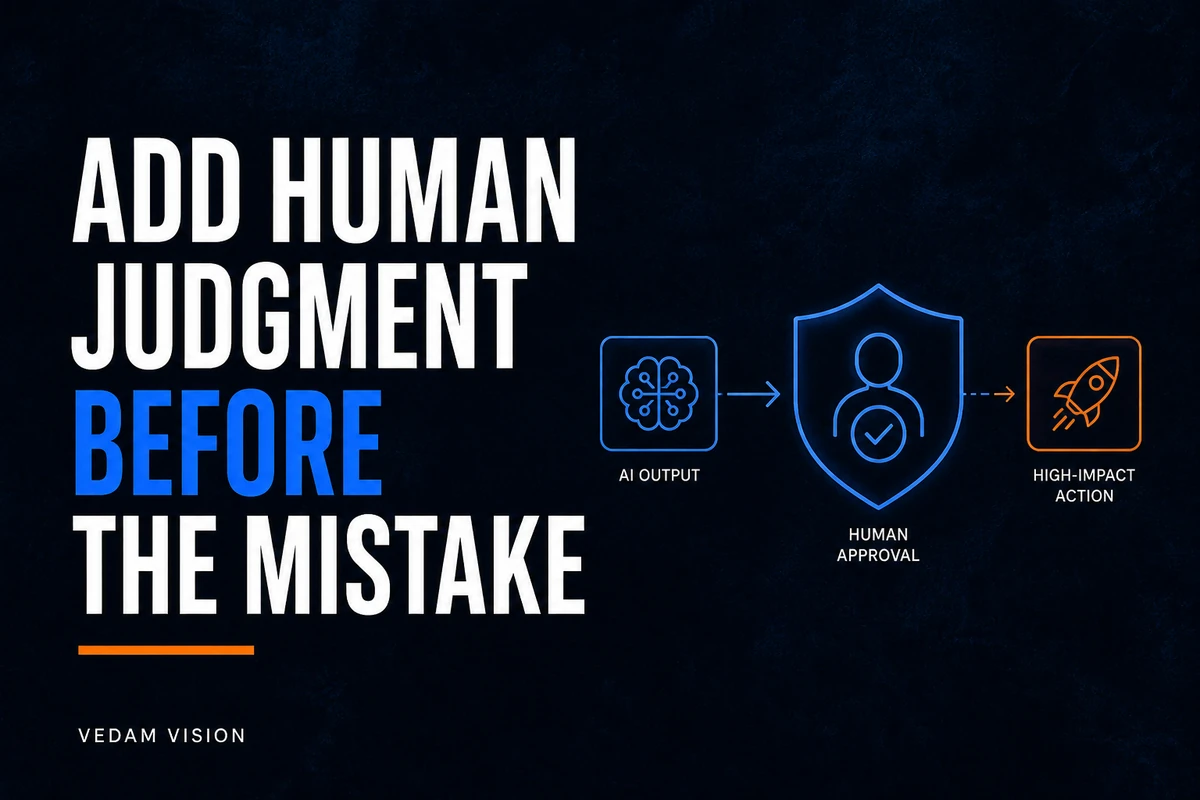
Removing human review from the calculation may make a forecast look better, but it can make the workflow less trustworthy. In many service businesses, review is where client context, commercial judgement, brand tone, and exception handling happen. Treat that role as part of the design. The question is whether the reviewer receives a more useful draft and can make a better decision with less repetitive preparation.
The NIST AI Risk Management Framework is useful as a practical reminder to evaluate context and risk, not just technical capability. A task with sensitive information or high consequences may require stricter controls and a narrower scope. The estimate should reflect that instead of assuming every task is interchangeable.
Use a pilot to replace assumptions with evidence
Set a limited pilot period and choose a small, representative sample. State the baseline, expected output, reviewer, accepted inputs, and stop conditions. Keep the current process available. Ask reviewers to record whether the draft helped, whether it required correction, and whether the quality bar was met. The pilot should not be silently expanded while these questions are unresolved.
At the end, compare the new workflow with the baseline. Look at preparation time, review time, errors, exceptions, and the place where released capacity was used. If the team now spends less time formatting and more time advising customers, that is a meaningful operational benefit. If review time rises sharply, investigate why before moving on.
A simple decision table for founders
Continue when the workflow has a named owner, an approved tool, inputs the team is allowed to use, a reviewer, and evidence that the draft improves the process. Redesign when the task is valuable but the source material or instructions are weak. Stop when the output is not dependable enough, the review burden is too high, or the workflow has a risk the business cannot manage responsibly.
For background on choosing an appropriate workflow, see Vedam Vision's guide to AI governance and the practical overview of AI solutions and automation. You can also use the free audit to identify where time is being lost before calculating a business case.
Do not turn an estimate into a promise
An ROI model is a decision aid, not a guarantee. Customer volume, team adoption, input quality, and the details of a workflow can change the result. State the assumptions plainly. Use ranges only when the business has evidence for them. Keep the language grounded: this task may create capacity, this pilot will test whether review effort changes, and this workflow may be worth standardising if the quality bar holds.
Vedam Vision's process and services overview can help teams connect a pilot to broader operational and digital work. The goal is not to use AI everywhere. It is to make a careful decision about where it improves the work people and customers already depend on.
Make capacity visible after the pilot
Released capacity can disappear if the team does not decide where it belongs. At the start of a pilot, identify the higher-value work that could receive more attention if routine preparation becomes lighter. It may be responding to qualified enquiries, improving onboarding, checking a client deliverable, documenting a process, or following up on open decisions. This makes the business case concrete without treating people as a cost to remove.
Ask each participant whether the pilot changed the shape of their work. Did it remove a repetitive first step? Did it create new checking work? Did it make a handoff clearer? Did it help a specialist spend more time on an issue that needs judgement? These questions can uncover value that a simple time calculation misses, while also uncovering costs that an optimistic estimate would hide.
Keep the comparison modest. A short pilot cannot prove a long-term commercial outcome. It can show whether a workflow has enough evidence to continue. If the answer is yes, standardise the accepted inputs, review point, exception route, and monthly check. If the answer is no, retain the lesson and direct the effort to a different workflow. A clear stop decision protects the team from paying for software that does not serve a useful job.
Share the result with the people doing the work
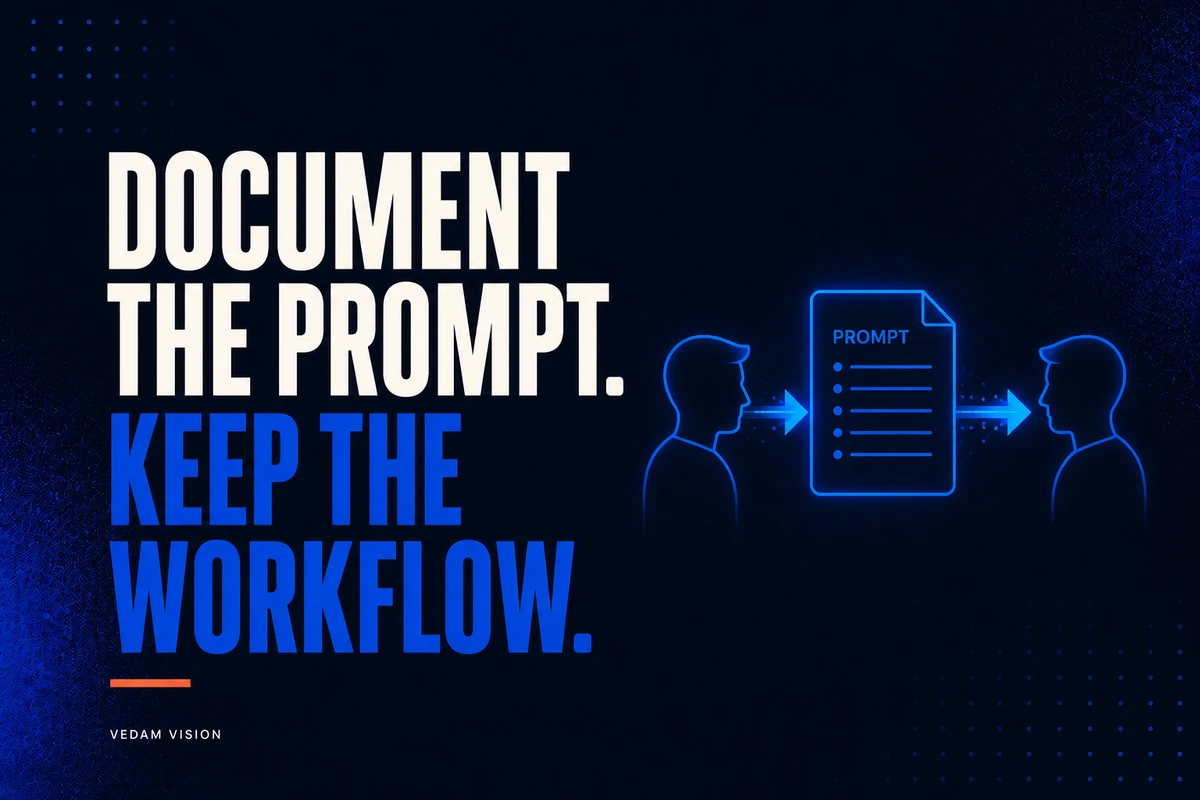
Close the pilot by showing the baseline, observed changes, limitations, and next decision in a short note. This builds trust because the team can see how the conclusion was reached. It also stops an AI initiative from becoming a collection of private prompts and assumptions. Clear records help a new reviewer understand why a workflow exists and what they should do when the output is uncertain.