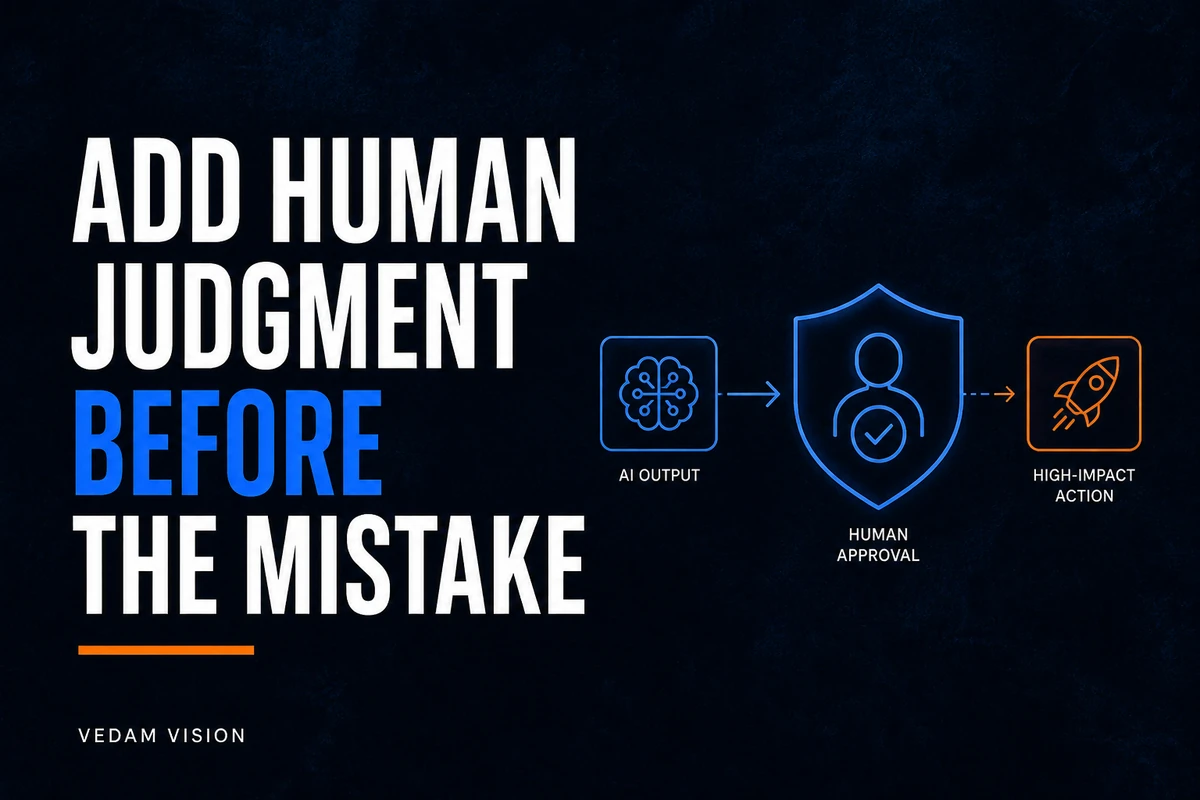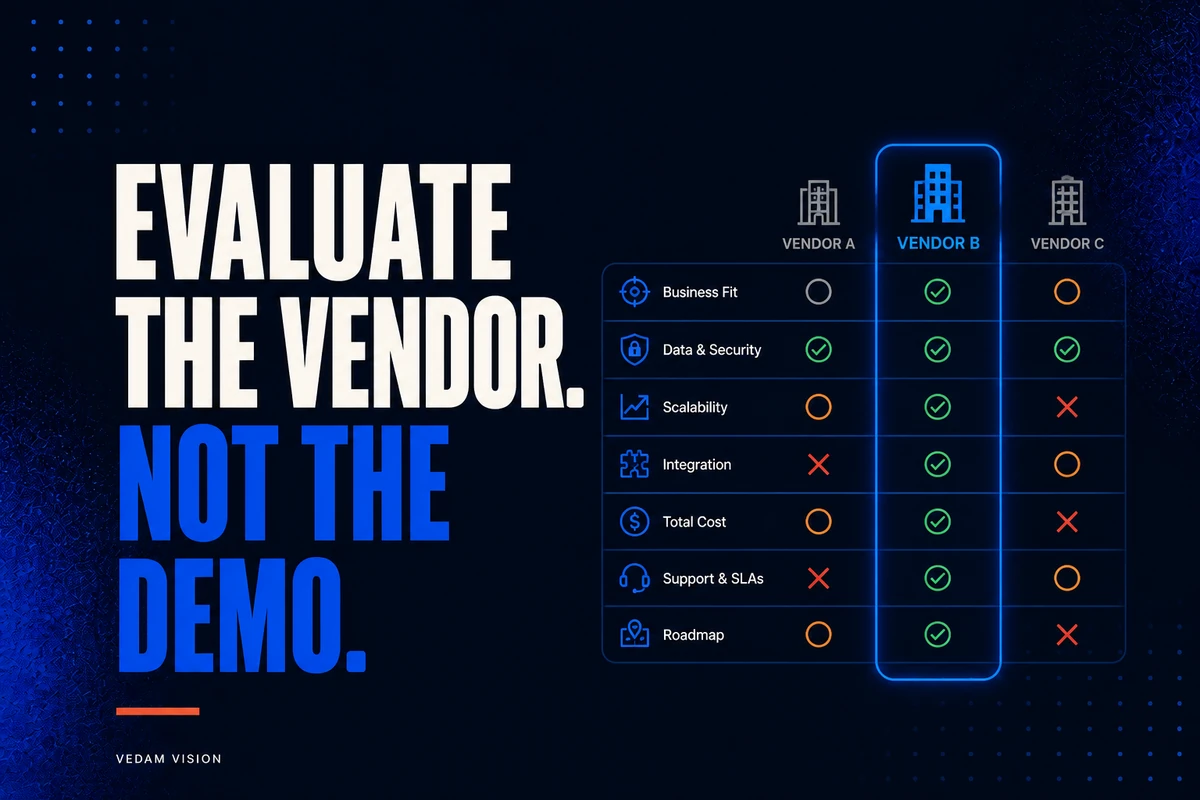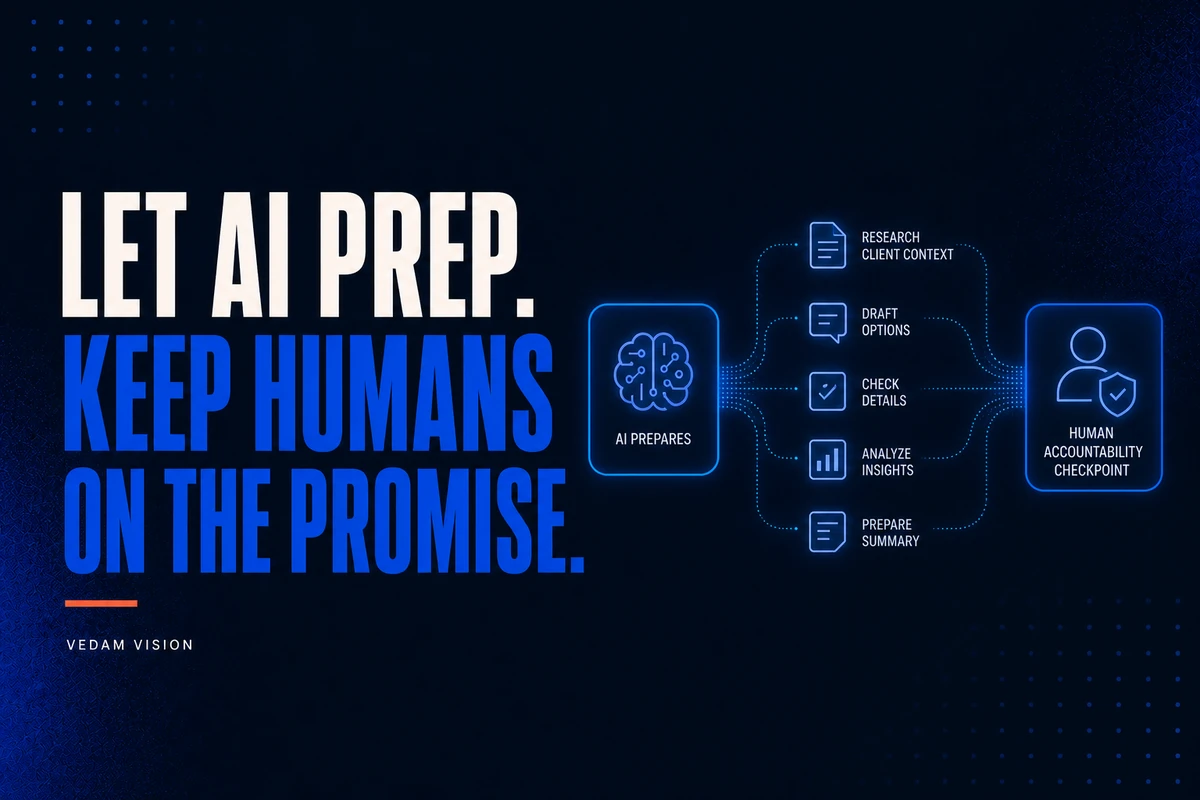
AI can make client service work easier to prepare, organise and review. It should not be asked to own client trust, commercial judgement, or a sensitive decision. The most useful service-business workflows use AI for a bounded first pass, then give a named person the information and authority to decide what happens next.
Agencies, consultants, studios and other client service teams often have a similar problem: people spend time moving information between calls, briefs, project tools, reports and email. This creates a practical opportunity for AI, but only when the team respects the difference between administrative preparation and the judgement a client is paying for.
Use AI where the work has a clear input and a reviewable draft
Good starting points include summarising an approved meeting record, extracting action items from internal notes, preparing a first project-status draft, sorting routine enquiries, or turning a completed discovery template into an internal brief. In each case, the source is known, the result has a clear purpose, and a member of the team can check it before anything is shared.
The task should be repeated often enough that the team can learn from it. A one-off strategic proposal is usually a poor early test because its quality depends on context that may not appear in the inputs. A recurring call-summary workflow is easier to assess. The team can compare the draft with the original record, correct omissions, and improve the source template or instructions when the same problem returns.
Keep client context in human hands
A useful draft is not the same as a finished client communication. Client relationships contain history, nuance, priorities and commercial context that may not be fully present in a note or form. The person responsible for the account should decide whether a message is correct, whether a recommendation is appropriate, and whether an exception needs a conversation rather than a standard response.
This is especially important when the work involves scope, pricing, commitments, complaints, reputation, legal language, financial decisions or sensitive personal information. AI can help organise an internal record of these cases, but a human should remain the decision maker. If the team cannot describe who owns the final action, the workflow is not ready for automation.
Four client-service workflows worth testing
1. Meeting follow-up preparation
After an internal or client meeting, a tool can turn approved notes into a draft list of decisions, actions, owners and open questions. The account lead checks that the language matches what was agreed and adds any essential context. The value is not sending messages without thinking. It is reducing the blank-page work that delays a clear follow-up.
2. Discovery brief assembly
When a client has completed a structured intake form, AI can organise the answers into an internal brief. A strategist then checks the brief, identifies missing information, and decides what to ask next. This works well when the form is designed for the job. It works poorly when the source is a loose collection of emails and assumptions.
3. Weekly project-status drafts
A project manager can use existing updates, milestones and open issues to prepare a first status report. The manager still confirms facts, removes information that should not be shared, and adds the recommendation that needs experience. The workflow is valuable when it makes reporting more regular without turning the report into generic text.
4. Enquiry triage
A team can classify incoming enquiries using a small approved service taxonomy, then draft an internal routing note or a first response for review. The exception route matters. Complaints, unusual requests, sensitive information and unclear enquiries should be routed to a person, not forced into a category just because the system is expected to answer.
Make a clear boundary for inputs
Before a team uses any external tool, it should decide what information may be used, who has access, and how uncertainty is handled. Start with the minimum data needed for the task. Do not upload a complete client history merely because it is convenient. If an approved sample is enough to test a draft workflow, use the sample.
Review the tool account and sharing settings. Limit pilot access to the people who need it. Keep the original record available. The CISA guidance for small and medium businesses is a useful reminder that access control and basic security practices belong in everyday operations, not only in large organisations.
Design the human review step
Review should not be a vague final glance. Give reviewers a small checklist. For a follow-up, check factual accuracy, commitments, names, tone, and the next action. For a brief, check the intended audience, problem, sources, constraints, and unknowns. For a status update, check milestones, blockers, ownership, and what the client should know.
Let reviewers label why a draft was rejected or changed. Helpful labels include missing context, incorrect fact, inappropriate tone, unsupported suggestion, sensitive information, and not applicable. These categories reveal whether the team needs a better source, narrower instructions, or a decision to keep the task human-led. They also prevent the same error from being corrected silently every week.
Do not confuse consistency with understanding
AI can make a draft sound polished even when it does not understand the client situation. This is why a confident tone is not a quality standard. A service team should check whether the output is supported by the source material and whether it answers the real question. If it does not, a person should replace it rather than asking the tool to produce more fluent language.
Use AI to reduce repetitive preparation. Use people to interpret context, weigh trade-offs, notice risk and build trust. The NIST AI Risk Management Framework and OECD AI Principles both support a practical focus on accountability and appropriate use. A small team can apply that thinking with clear ownership, a review process, and a record of exceptions.
Run a limited pilot, not an invisible rollout
Choose one workflow and test it with a small group. Define approved inputs, the expected draft, reviewer, exception conditions and review date. Keep the previous method available during the test. Record whether preparation is faster, whether review is easier, and whether quality remains acceptable. Do not claim a commercial result before the team has evidence from its own work.
At the end of the pilot, decide whether to continue, redesign or stop. Continue when the process creates a genuinely useful draft and reviewers can keep the right level of control. Redesign when the workflow is promising but source quality or instructions are weak. Stop when the task has too much context, too much risk, or too little benefit to justify the operational effort.
Build a service standard around the workflow
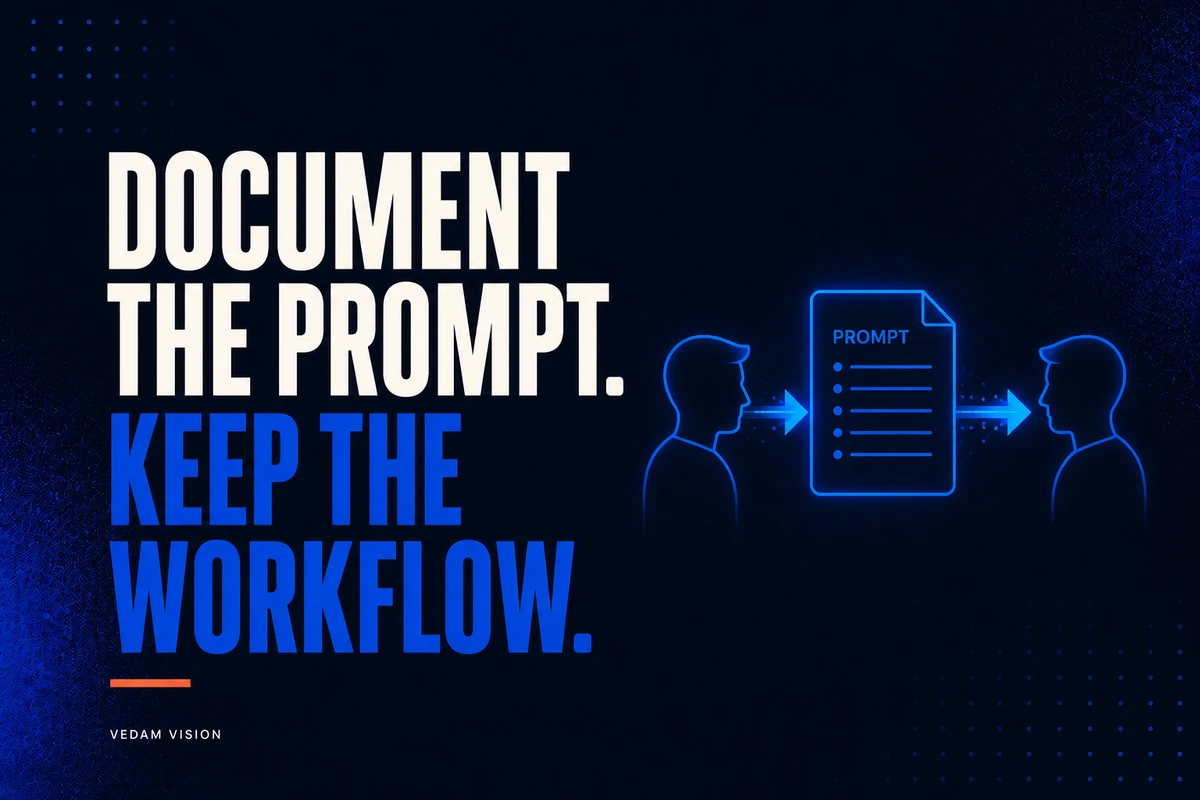
If the pilot works, document the process in a short standard: purpose, owner, approved source, tool, review checklist, exception route and review date. This keeps the workflow from becoming a private habit in one person's chat window. It also makes it easier for a new colleague to understand what the tool does and what remains their responsibility.
Vedam Vision can help teams map a workflow through AI solutions and automation, understand the delivery process, and identify useful starting points with a free audit. For related reading, see the guides to AI governance, AI ROI, and the complete services overview.
The goal is not to replace the relationship work that makes a client service business valuable. It is to give skilled people better prepared information, clearer handoffs and more time for the parts of service that require attention and judgement.
Questions to ask before using a draft with a client
Before an AI-assisted draft becomes client-facing, the responsible person should ask a few direct questions. Does every factual statement come from an approved source? Does the message reflect the current scope and relationship? Is there a commitment, deadline or recommendation that needs a person to confirm it? Does the language respect the client's situation, including anything sensitive that may have been discussed privately? If the answer is unclear, pause the draft and obtain the missing context.
This short check protects the team from a common mistake: treating a cleanly written message as proof that it is right. The person who owns the relationship can see what a general tool cannot see, including a previous promise, a change in priorities, or the tone needed after a difficult conversation. Their review adds the value that the client expects from a professional service business.
Keep the system useful as the service changes
Review an adopted workflow at regular intervals and whenever the team changes its service, process or approved tools. A useful prompt, template or checklist can become stale when a team introduces a new offer or changes the information it collects. A brief review keeps the workflow connected to current practice. It also gives staff a clear place to raise a concern before a small issue affects many client interactions.
A disciplined service team treats AI as support for good operations, not a substitute for ownership. With a clear input boundary, a visible human decision point, and a record of exceptions, the team can gain the benefits of faster preparation without weakening the trust that makes clients stay.