A marketing plan template for service business should help an owner make choices, not create an impressive document that nobody uses. The most useful version fits on a few pages, connects the offer to a real buyer situation, and gives a small team a way to decide where time and money go next.
This template is designed for business owners who need a working plan for services such as consulting, design, implementation, operations support, or specialist delivery. It does not assume a large budget or a dedicated marketing department. It asks for clarity, a repeatable rhythm, and enough evidence to change course when an assumption does not hold.
Use the template as a decision document
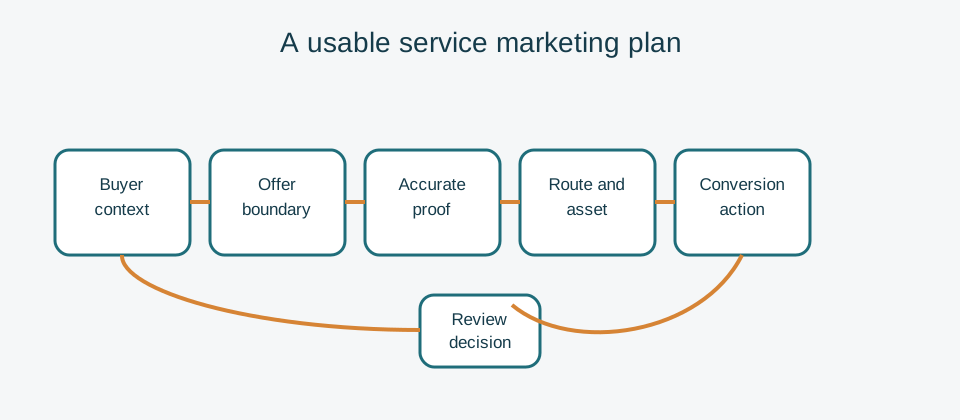
Marketing becomes unfocused when every good idea becomes a priority. A plan is useful when it makes tradeoffs visible. It should say which buyer group matters first, what the business wants that group to understand, what action it wants them to take, and which work will wait until later.
Start with the planning period. For a smaller service business, a quarter or a focused ninety-day cycle is often easier to operate than a year of speculative activity. Review it regularly. The point is not to predict every result. The point is to make the next few decisions more deliberate.
Fill this in before choosing tactics
- Business aim: What needs to improve in the next planning period? Be specific about the commercial or operational need, without inventing a target that the business cannot support.
- Priority buyer: Which type of customer, role, or situation will receive the first attention?
- Problem: What change is the buyer trying to make, and what does delay cost in time, confidence, coordination, or opportunity?
- Offer: What is included, what is excluded, and what decision or deliverable will the buyer receive?
- Proof: What accurate work samples, process evidence, qualifications, or explanations can support the promise?
Do not write an audience description so broad that it could suit any company. A useful priority buyer is specific enough to guide a service page and a sales conversation, yet not so narrow that it rests on one imagined individual.
Section 1: clarify the offer before promoting it
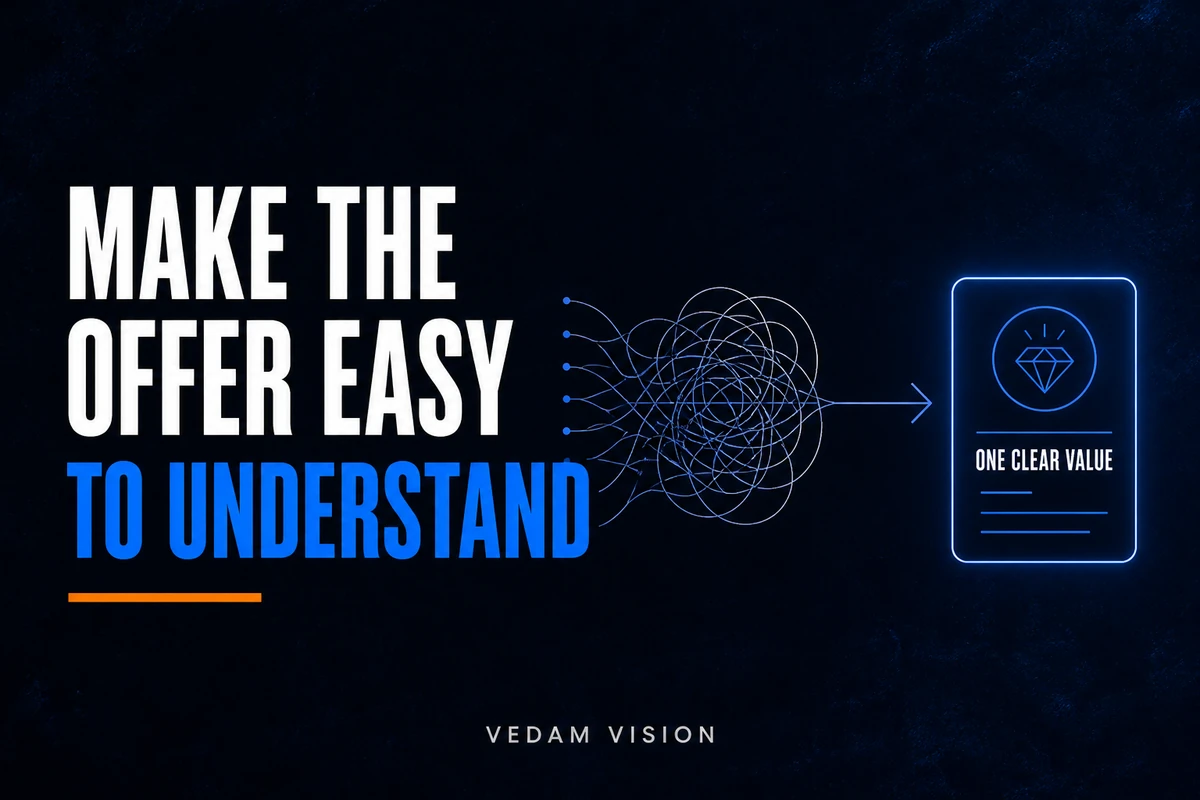
Service businesses often market their capabilities instead of their offer. Capability tells a buyer what the team can do. An offer tells them why the work is relevant now, what happens first, and what they can expect from the engagement. Both matter, but the offer makes comparison easier.
Use this prompt: “For [priority buyer] who needs to address [situation], we provide [defined work] so they can make [decision or improvement], subject to [important boundary or dependency].” The final clause is important. It prevents the message from promising an outcome that depends on factors outside the service provider's control.
Review the Vedam Vision services and the AI solutions and automation work with this lens. A visitor should be able to see the work, the business context, and a realistic way to begin. If a service needs discovery before a fixed scope is responsible, explain the discovery step rather than hiding that uncertainty.
Section 2: set the buyer journey and conversion action
A plan needs an answer to a simple question: what should a qualified buyer do next? The answer may be a call, a request for an audit, a response to a useful email, or a carefully designed form. It should fit the commitment required. Asking a cold visitor to buy a complex project is usually less reasonable than inviting them to diagnose whether the problem is worth solving together.
Map the path in plain language: first question, useful explanation, offer page, proof, enquiry, qualification, proposal, decision. Then write the asset or action that supports each point. The free digital audit can support a buyer who needs an initial view. The contact route can suit someone already ready to discuss a project. A single clear action at a time makes it easier to learn what created a good conversation.
Template field: conversion definition
Write: “A useful conversion is [action] from a buyer who meets [fit conditions]. We will respond within [owned response approach], record [key questions], and route the lead to [named role].” This avoids reporting every form completion as success when the work is not a fit.
Section 3: choose a small number of marketing routes
Choose routes based on how the priority buyer looks for help and how the business can show up consistently. Search content may work when buyers begin with a question. Partnerships may work where related providers see the problem first. A founder's point of view may help when trust and judgment are part of the purchase. A referral process may help when existing relationships already produce good-fit work.
Limit the first cycle to a manageable set. For each route, record a hypothesis, the asset needed, the owner, the cost or effort, and the signal you will watch. “Post more often” is not a hypothesis. “A page that answers the buyer's recurring question will lead to more relevant audit requests than a generic capabilities page” can be tested and improved.
The Vedam Vision process is useful evidence when a buyer needs to know how work will be approached. The portfolio and case study library can help a visitor assess work, provided the examples remain accurate and authorised. Proof should reduce uncertainty, not create a louder version of the same claim.
Section 4: create the operating calendar
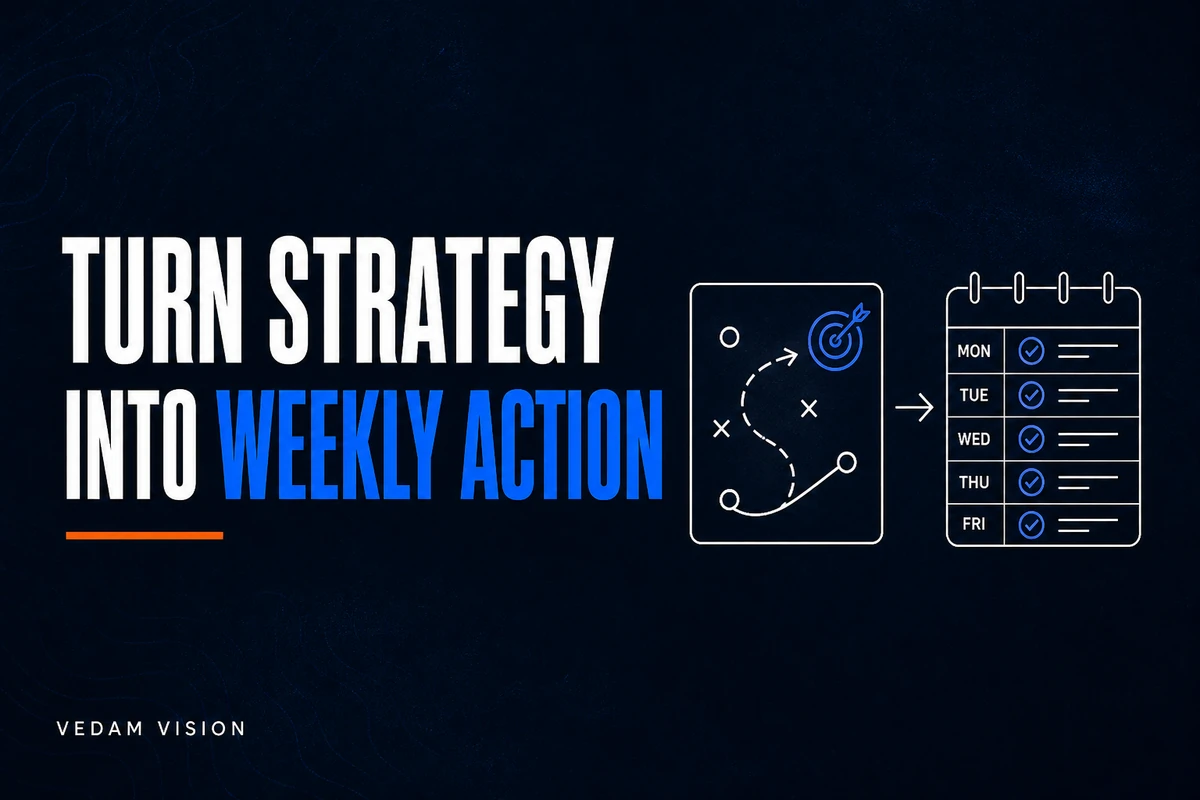
A service marketing calendar is not a list of dates for the sake of activity. It is a sequence of useful work: one message to clarify, one proof item to prepare, one campaign or relationship action to run, and one review to hold. Start with the assets that make the offer easier to understand. A clear service page and a practical explanation of a buyer problem usually deserve attention before a broad publishing programme.
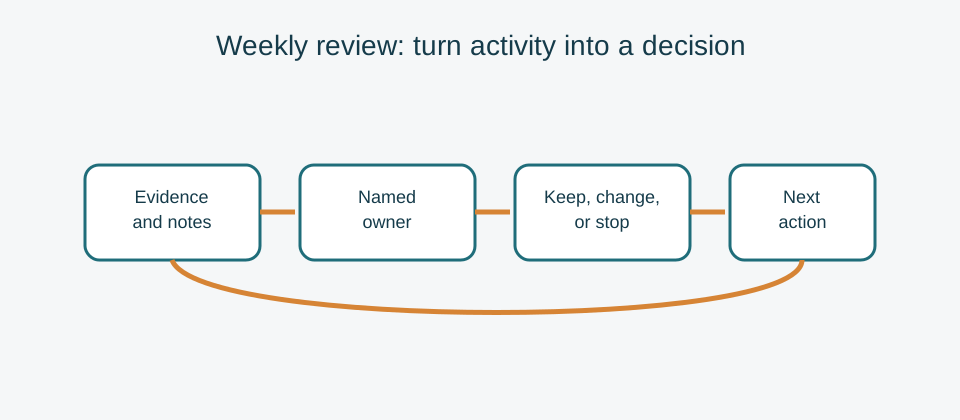
Use this weekly rhythm
- Publish or improve one asset that answers a buyer question or clarifies the offer.
- Activate one route, such as partner outreach, a focused email, a campaign adjustment, or a sales enablement conversation.
- Review enquiries, objections, delivery capacity, and follow-up quality with the person who handles the work.
- Choose one adjustment for the next week and record why it was made.
Assign a named owner to each item. An owner does not have to perform every task, but they are responsible for moving it forward and reporting what happened. This is especially important where marketing, sales, and delivery are shared by a small team.
Section 5: set a budget and measurement boundary
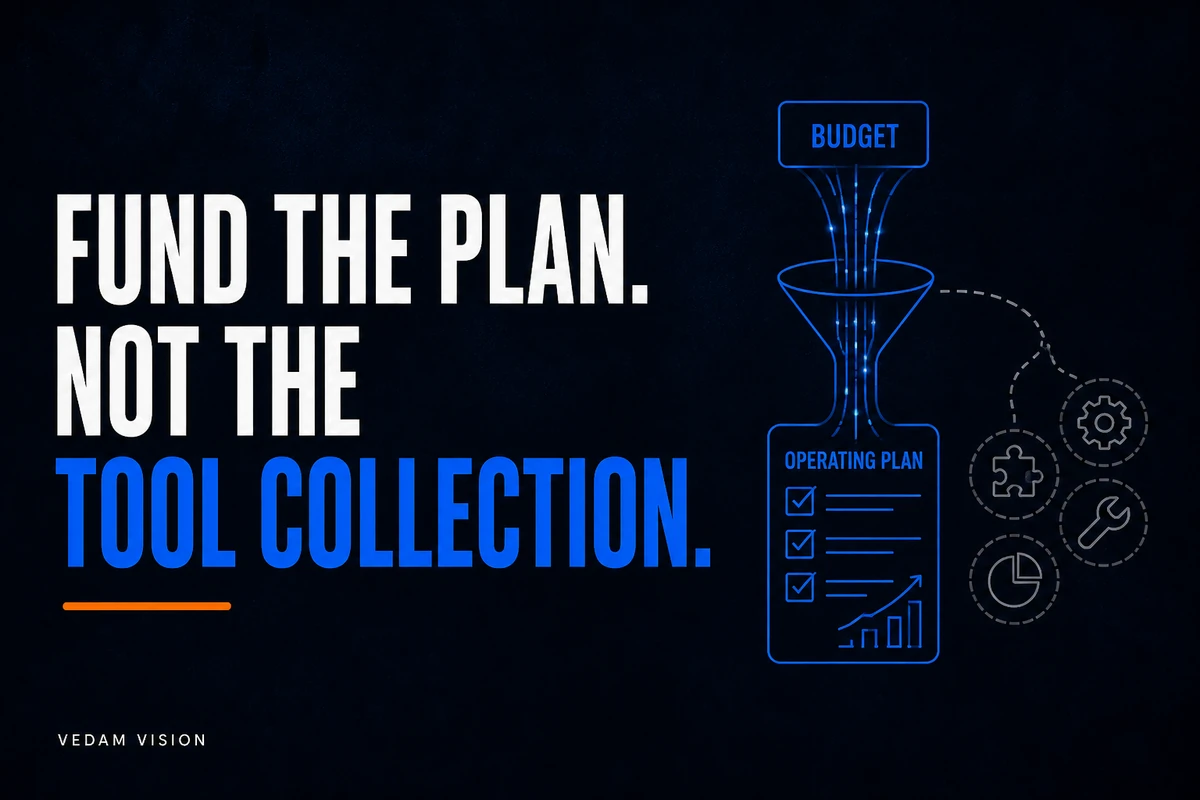
Budget decisions should follow the plan, not come first. Separate money that buys reach from money that improves the conversion path or the service itself. It may be wiser to improve a weak offer page, response process, or proposal than to add spend to a channel that sends visitors into uncertainty.
Use a small scorecard: qualified enquiries, conversations that progress, proposal requests, accepted work where that can be accurately recorded, source route, and common reason for mismatch. Numbers need context. A small sample can be directionally useful, but it is not proof that a channel or message will keep performing. Read the notes behind the number before moving budget.
Include a stop rule. For example: if a route has been given the agreed effort and is not producing the kind of conversation expected, pause it, examine the offer and the audience assumption, then decide whether to change the asset, the route, or the priority.
Section 6: record risks and limitations
Good plans make uncertainty explicit. Record dependencies such as approval time, availability of accurate proof, access to subject matter expertise, seasonal shifts, privacy requirements, or limited delivery capacity. This is not pessimism. It prevents a calendar from becoming a promise that people cannot support.
Also name the limitation of the plan itself. Marketing can create attention and improve buyer understanding. It cannot compensate for a service that is poorly defined, a team that cannot respond, or a commercial model that does not match the buyer's reality. Use the plan to identify those conditions early.
Copy-ready marketing plan template
Planning period: [dates]. Business aim: [decision needed]. Priority buyer: [group and situation]. Core problem: [problem and consequence]. Offer: [scope, boundary, next step]. Proof: [accurate evidence]. Primary conversion: [action and fit conditions]. Routes: [two or three hypotheses]. Weekly work: [asset, activation, review]. Owner: [named person]. Scorecard: [few decision signals]. Risks: [dependencies and stop rule].
Conclusion: keep the plan usable
A marketing plan template for service business earns its place when the team can use it in a weekly meeting. Start with the buyer and offer, choose a realistic conversion path, run only the routes you can learn from, and review the evidence with delivery. The document can stay short. The important thing is that it changes the next action.